Penny came home from the rescue at four years old. She had been a breeding mama at a puppy mill in central Florida, and she arrived already knowing how to survive but not yet knowing how to be safe. The shelter told me she was "shy but sweet." What they did not tell me was that she would spend the first two weeks sleeping with one eye open, refuse food from my hand for three weeks straight, and jump a foot off the ground every time I dropped a spoon. I spent a lot of time those first months wondering: is this just a rescue dog adjusting, or does she actually have anxiety? After five years with Penny and a lot of reading, I know the answer was both. And I know that the signs were there from day one, I just did not know what I was looking at.
If you have a rescue dog who seems nervous, quirky, or just "a little off," this list is for you. These are the ten behaviors that told me Penny was not just adjusting. She was anxious, and she needed more than time.
If you are seeing more than three of these signs, daily calming support may help take the edge off while trust builds.
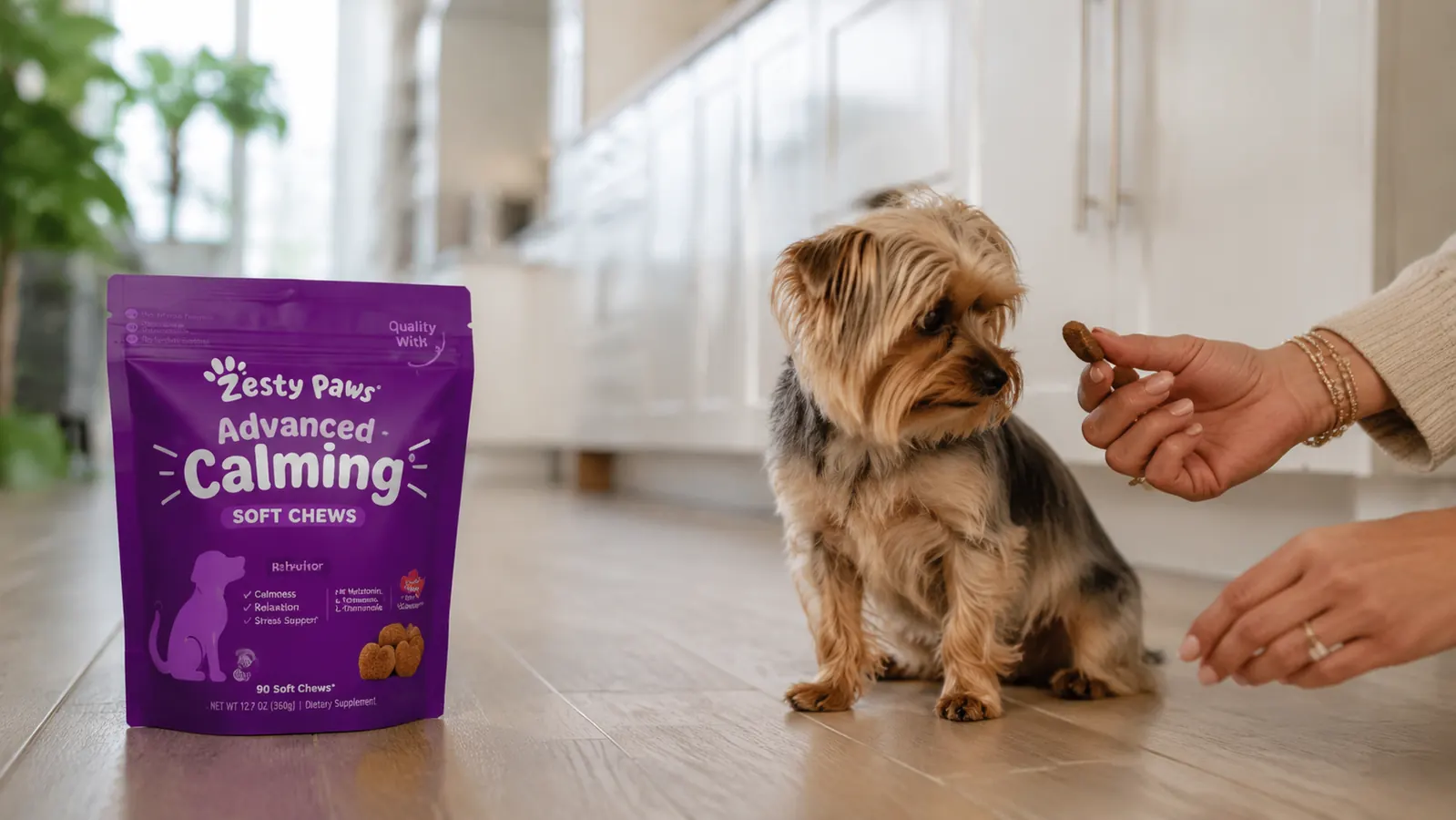
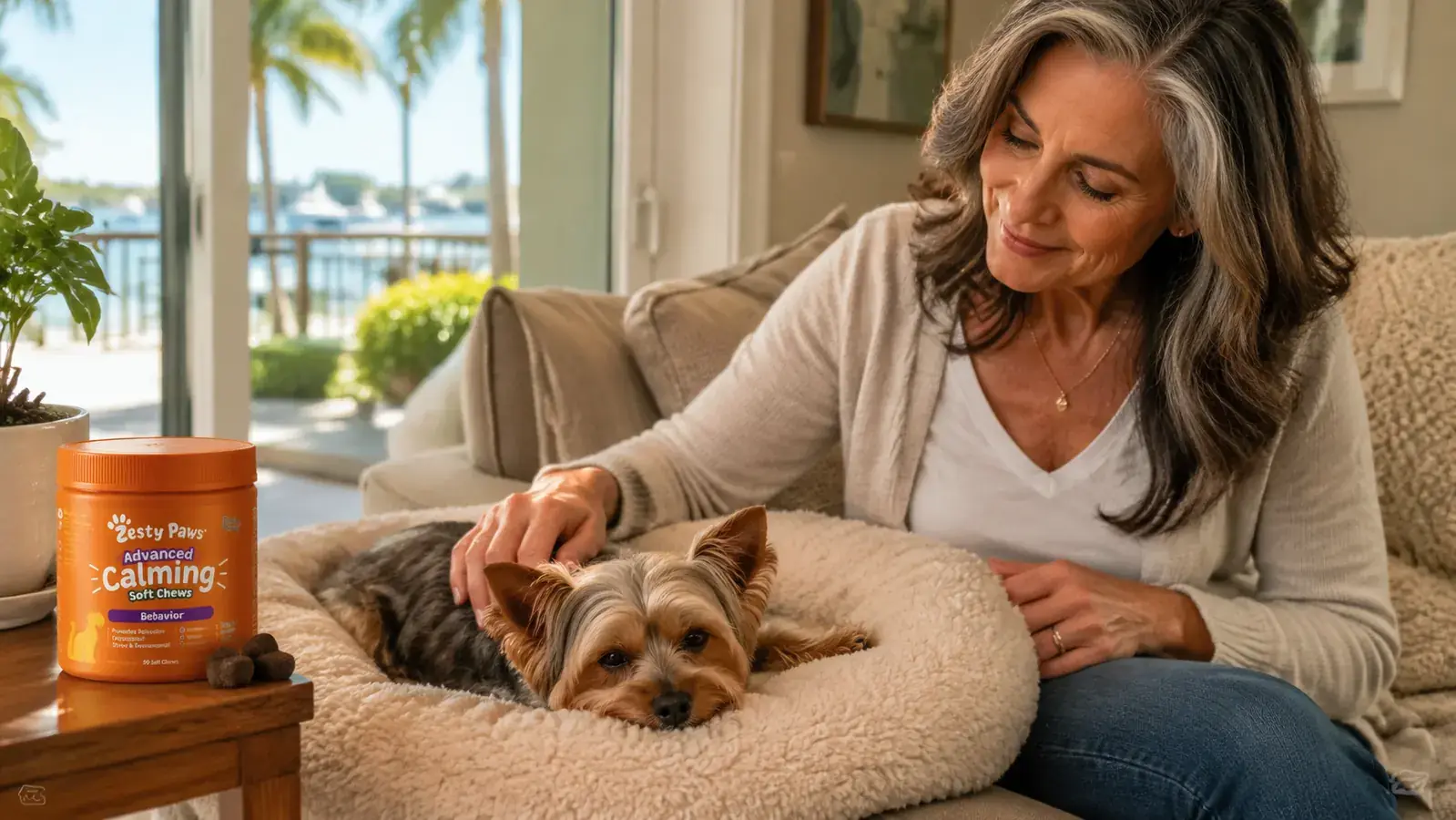
Zesty Paws Advanced Calming Chews use Suntheanine L-Theanine to support a calmer baseline in anxious dogs. They are soft, small, and easy to work into your routine. Over 5,500 pet owners have rated them 4.2 stars on Amazon.
Amazon Check Today's Price on Amazon →She Will Not Take Food Directly from Your Hand
Penny would eat kibble from the floor but turn her nose away from anything offered by a hand for the first three weeks home. This is not pickiness. A dog who is anxious about humans reads the extended hand as a threat before she reads it as a gift. Rescue dogs from high-stress environments often flinch from direct human contact at the food level. It is one of the earliest and most overlooked signs. If your rescue will eat from a bowl but retreats from your hand, that is anxiety, not attitude. Some dog owners find that tucking a calming chew into the food bowl alongside the kibble, rather than offering it by hand, is the easiest way to start supplementing an anxious dog who is still working up to taking things directly.
Amazon See Zesty Paws Calming Chews on Amazon →She Hides Under Furniture When You Have Visitors
Penny had three designated hiding spots in her first year: under the kitchen table, behind the couch, and under my bed. Every time someone new came through the door, she disappeared. I used to apologize to guests and say she was shy. But consistently retreating to a hiding spot is not shyness. It is a stress response. Anxious dogs self-regulate by creating physical barriers between themselves and the perceived threat. If your rescue vanishes the moment a new person enters, that is anxiety showing itself through avoidance.
Amazon Check Current Price on Amazon →Loud or Unexpected Noises Send Her Into a Panic
A dropped spoon. The ice maker. A garbage truck two blocks away. Any of these could launch Penny off the couch and into a sprint for the back bedroom. Noise sensitivity is one of the most common anxiety markers in rescue dogs, especially those from chaotic or loud environments. The response is out of proportion to the sound. If a noise makes your dog shake, bolt, or hide and then takes more than two minutes to recover from, that is an anxiety response, not a reasonable startle reaction.
Amazon Check Current Price on Amazon →She Will Not Make Eye Contact
People expect anxious dogs to cower or shake. But sometimes it looks quieter than that. Penny would simply look at the wall when she was stressed. Averting gaze is a dog's way of communicating discomfort. A rescue dog who consistently avoids eye contact with you in the first weeks and months is not being standoffish. She is trying to manage an overwhelming amount of input. Over time, sustained gaze avoidance paired with any other item on this list points clearly to anxiety rather than a laid-back temperament.
Amazon Check Current Price on Amazon →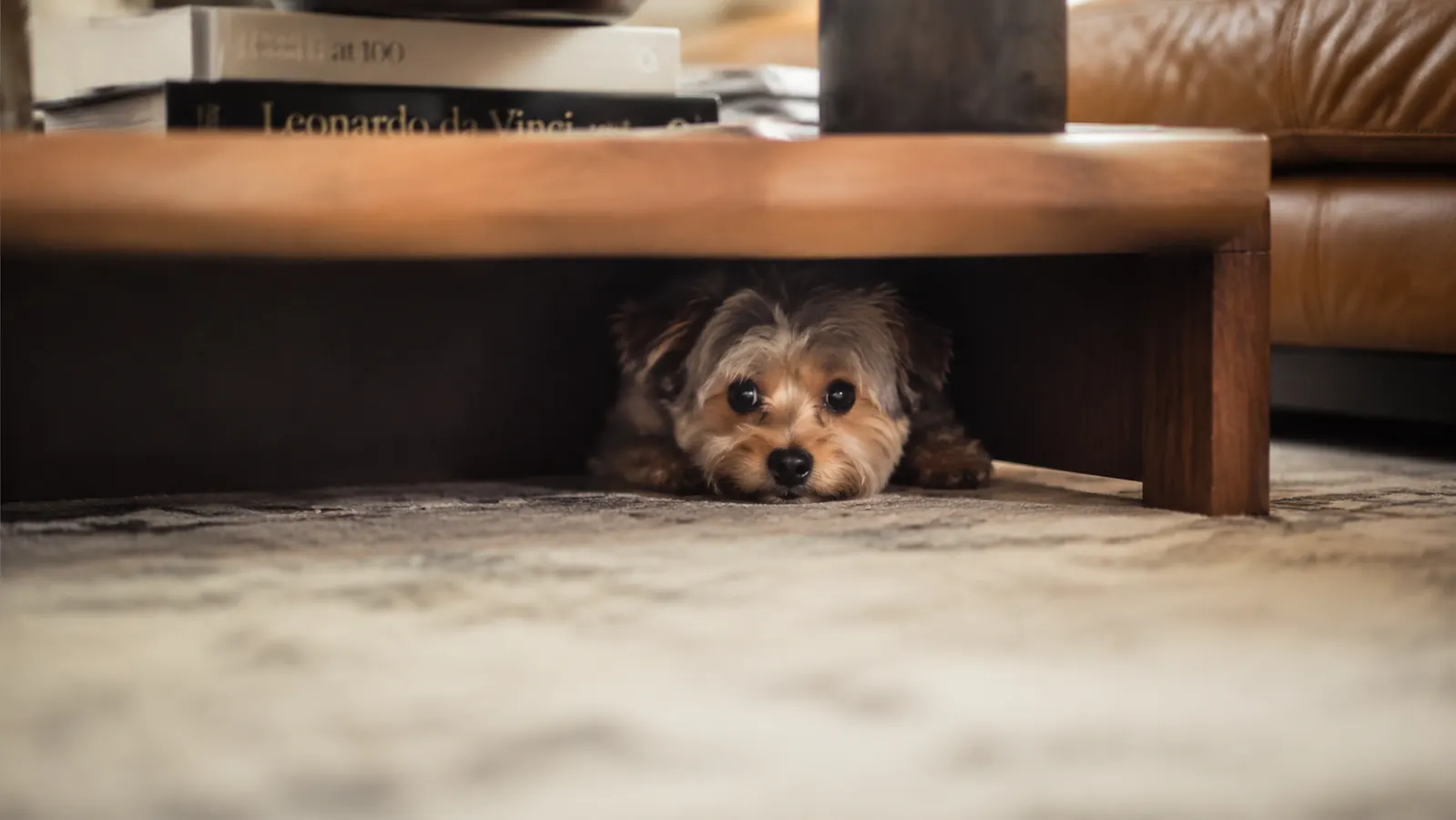
She Paces or Cannot Settle at Bedtime
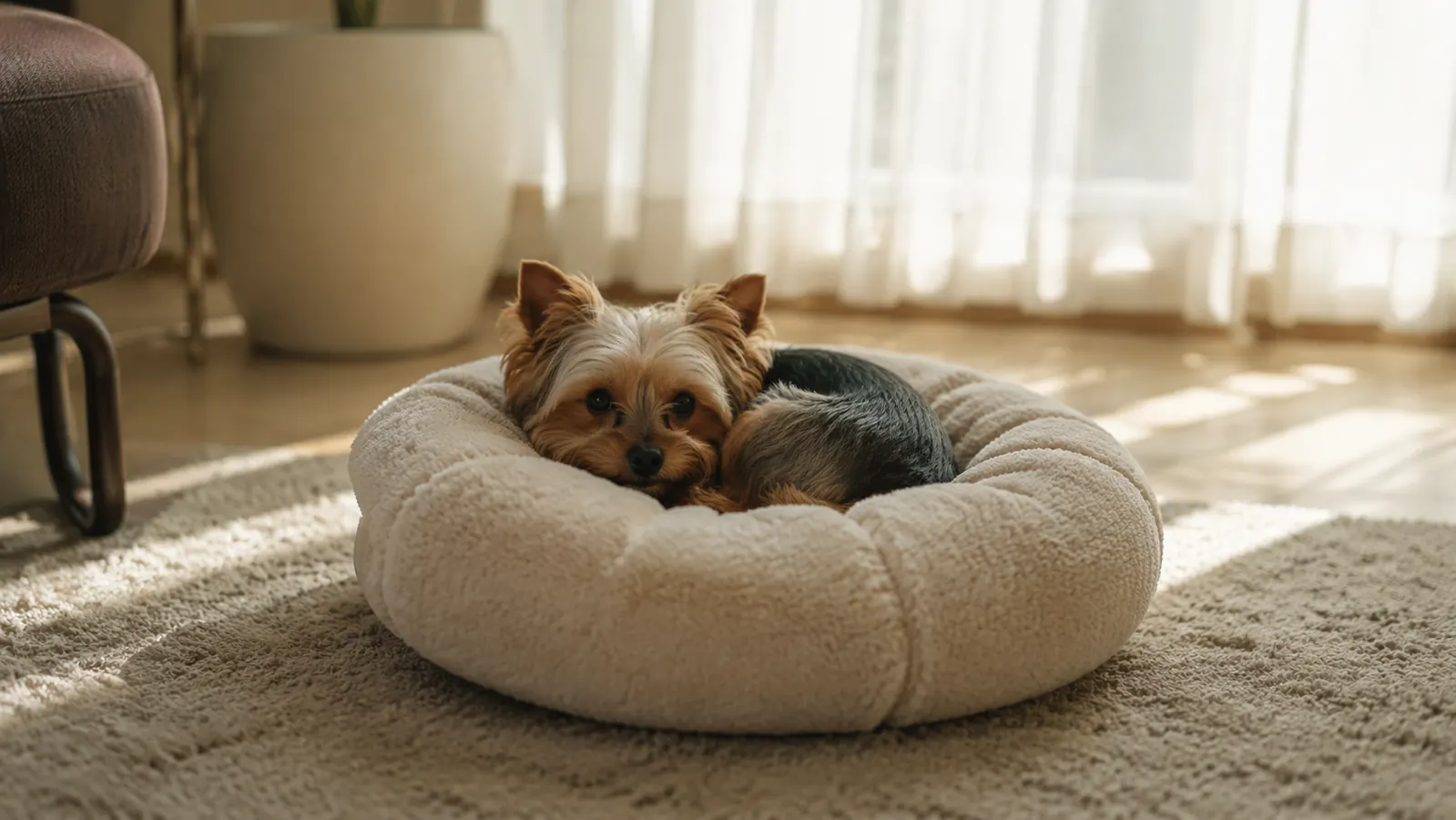
An anxious dog rarely sleeps deeply right away. Penny would pace the bedroom for twenty to forty minutes before finally curling up, and even then she would startle at the smallest sound. If your rescue dog circles, paces, or repositions constantly before settling, her nervous system is still running even when the day is done. This is one of the clearest indicators that the anxiety is baseline and not just situational. A calming supplement given about 30 minutes before bedtime is one of the most targeted ways to use it. That is when Penny showed the most visible difference after we started her on Zesty Paws.
Amazon See Zesty Paws Calming Chews on Amazon →She Licks Her Paws or Flanks Obsessively
Repetitive self-grooming that goes beyond normal coat maintenance is a recognized anxiety behavior in dogs. Penny went through a phase in month two where she licked her front paws raw. I took her to the vet thinking allergies. The vet checked her over and said the skin looked fine, but asked how she was adjusting at home. The paw-licking was a self-soothing behavior. It is the dog version of nail-biting. If your rescue is licking the same spot over and over with no dermatological explanation, anxiety is worth considering.
Amazon Check Current Price on Amazon →She Does Not Play, Even When You Try
A dog who has been chronically stressed often does not know how to play. Play requires a sense of safety. Penny ignored every toy for the first eight weeks she was home. I would roll a ball toward her and she would stare at it like it was a trap. If your rescue dog shows no interest in toys or play, even with plenty of opportunity and gentle encouragement, it is not that she is too smart for toys or too mature. Chronic anxiety suppresses play drive. It is one of the things that told me Penny needed more active support than time alone was providing.
Amazon Check Current Price on Amazon →The signs were there from day one. I just did not know what I was looking at. Penny was not shy. She was overwhelmed, and she needed more than time.
She Pants When She Is Not Hot or Tired
Panting is a classic anxiety signal, and one that is easy to miss because we associate it with heat or exercise. If your rescue pants while sitting still in an air-conditioned room, or while riding in the car on a cool day, or during a calm evening on the couch, that is stress panting. It often comes paired with yawning, lip-licking, or a tucked tail. Taken alone, any one of those might look like nothing. Together, they paint a clear picture.
Amazon Check Current Price on Amazon →She Guarded Her Food or Water Bowl Intensely at First
Resource guarding in a rescue dog is often anxiety, not aggression. A dog who came from an environment where resources were scarce or unpredictable will guard food, water, or sleeping spots as a survival behavior. Penny did not growl, but she would hover over her bowl even after she had finished eating, sometimes for ten minutes. If your rescue resource guards intensely in the first months home, it is worth separating feeding from other pets and giving her a quiet, low-traffic eating spot. The behavior typically lessens as the dog learns that resources are reliable. But if it persists past six months, anxiety is likely still driving it.
Amazon Check Current Price on Amazon →She Shakes or Trembles in Situations That Are Not Cold or Painful
Trembling is the sign most people recognize immediately. Penny shook every time I picked her up for the first month. She shook in the car. She shook when my neighbor's dog barked through the fence. Shaking or trembling in the absence of cold or physical pain is an adrenaline response. The body is preparing to flee a threat that, to you, does not exist. To her, the threat is real and immediate. If your rescue shakes consistently in calm, non-threatening situations, she is not cold and she is not sick. She is anxious. This is the sign where most dog owners finally take action, and it is where adding a daily calming supplement made the most visible difference for Penny over the first four to six weeks.
Amazon See Zesty Paws Calming Chews on Amazon →What I Would Skip
Not every anxious behavior needs a supplement. Penny still startles at the ice maker, and she probably always will. The goal is not to eliminate every stress response. Dogs have nervous systems for a reason. What you are looking for is whether the anxiety is so constant and so baseline that it is affecting her quality of life: sleep, eating, play, bonding, settling in her own home. If you are seeing four or more of the signs on this list on a regular basis, that is not just personality. That is a dog who is working too hard just to get through the day. And she deserves some support.
Anxiety in a rescue dog is not a character flaw. It is a reasonable response to an unreasonable history. Your job is not to fix her. It is to give her enough calm that she can finally figure out she is safe.
Ready to give your rescue dog a calmer baseline while trust keeps building?
Zesty Paws Advanced Calming Chews are formulated with Suntheanine L-Theanine to support composure and relaxation in dogs experiencing everyday stress and separation anxiety. Soft, small chews that most dogs will eat from a bowl even before they will take treats from your hand. If you are seeing multiple signs from this list, it is worth trying for four to six weeks and watching what changes.
Amazon Check Today's Price on Amazon →