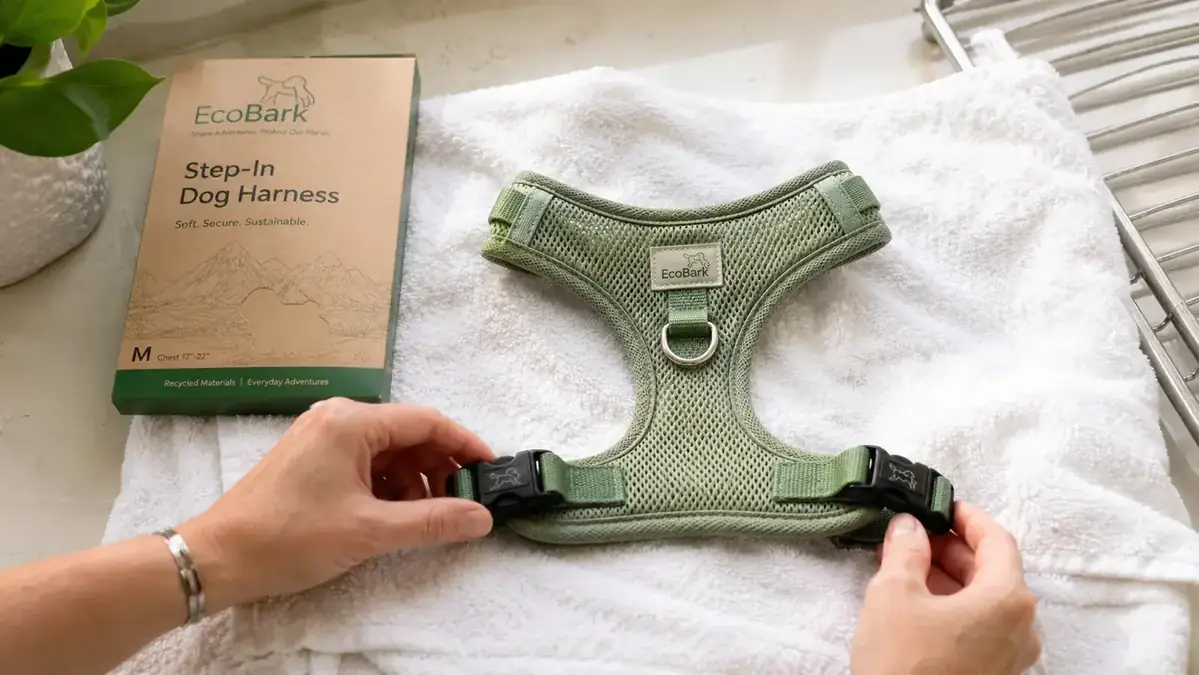

Penny came to me at age four from a puppy mill rescue. She weighed 5.8 pounds and had spent her entire life in a wire cage. She does not know how to play with toys. She startles at the sound of ice in a glass. And if you try to slip anything over her head, she drops to the floor and goes completely still, the way a prey animal does when it thinks it has been caught. That response does not fade easily. Two years into having her, we were still fighting every morning over the over-the-head harness I had been using since she arrived. I would take it off her. She would shake. I would feel terrible. Then I found the EcoBark Step-In Harness and genuinely did not expect it to matter this much.
That was four months ago. Penny is now 6.1 pounds, healthy, and we walk every morning without drama. This review covers everything: the fit across Penny's XS size, how the mesh holds up through Florida heat and daily washing, where the design quietly falls short, and who this harness is actually right for.
Quick Verdict
The step-in design is a genuine lifeline for small dogs who panic at over-the-head harnesses, and the soft mesh is kind to delicate tracheas. Sizing is accurate if you measure carefully, and it washes well. The one real weakness is the velcro tab on the back flap, which starts to collect lint after a few months of daily use.
Amazon Check Today's Price →If your small dog fights the over-the-head harness every single morning, there is a better way.
The EcoBark Step-In Harness is designed for exactly that problem. Penny wears an XS. It ships with a size chart worth reading before you order.
Amazon Check Today's Price on Amazon →How I Have Used It
Our routine is simple. Morning walk, about 25 minutes, every day of the week. South Florida in May through August is already 80 degrees by 7 a.m., so we go early, walk the shaded side of the block, and come back before the concrete gets hot. Penny wears the harness for the full walk, then I remove it when we get home. It goes on and off once a day, every day. By the end of four months, that is roughly 120 harness sessions.
I wash the EcoBark harness once a week in the washing machine on cold, gentle cycle, in a mesh laundry bag. I hang it to dry on the dish rack. That is 17 washes at this point. I will get into what has and has not held up, but the short version is: the mesh body is fine. The metal D-ring and the side-release clips have shown zero rust or stress. The velcro tab on the back cover flap is where things get complicated.
I also want to mention that I sized Penny into the XS, which EcoBark lists as fitting a chest girth of 11 to 15 inches. Penny measures 12.5 inches around the chest, which landed her right in the middle of the range, and the fit has been consistent across four months. She has not gained or lost noticeable weight, so I cannot speak to how well the adjustment buckles handle a dog who fluctuates, but the straps do have real range.
Why the Step-In Design Matters for Small Dogs With Trachea Sensitivity
Collars are genuinely risky for toy breeds. Yorkies, Shih Tzus, Chihuahuas, and Maltese are all disproportionately prone to tracheal collapse, a condition where the cartilage rings of the windpipe weaken and flatten under pressure. A dog who lunges, gets startled, or pulls suddenly on a collar can cause real, cumulative damage to that structure over time. My vet was the one who told me this when Penny was first examined and I mentioned she was walking on a collar. She said, without any drama, that she sees trachea problems in small dogs whose owners did not know to switch.
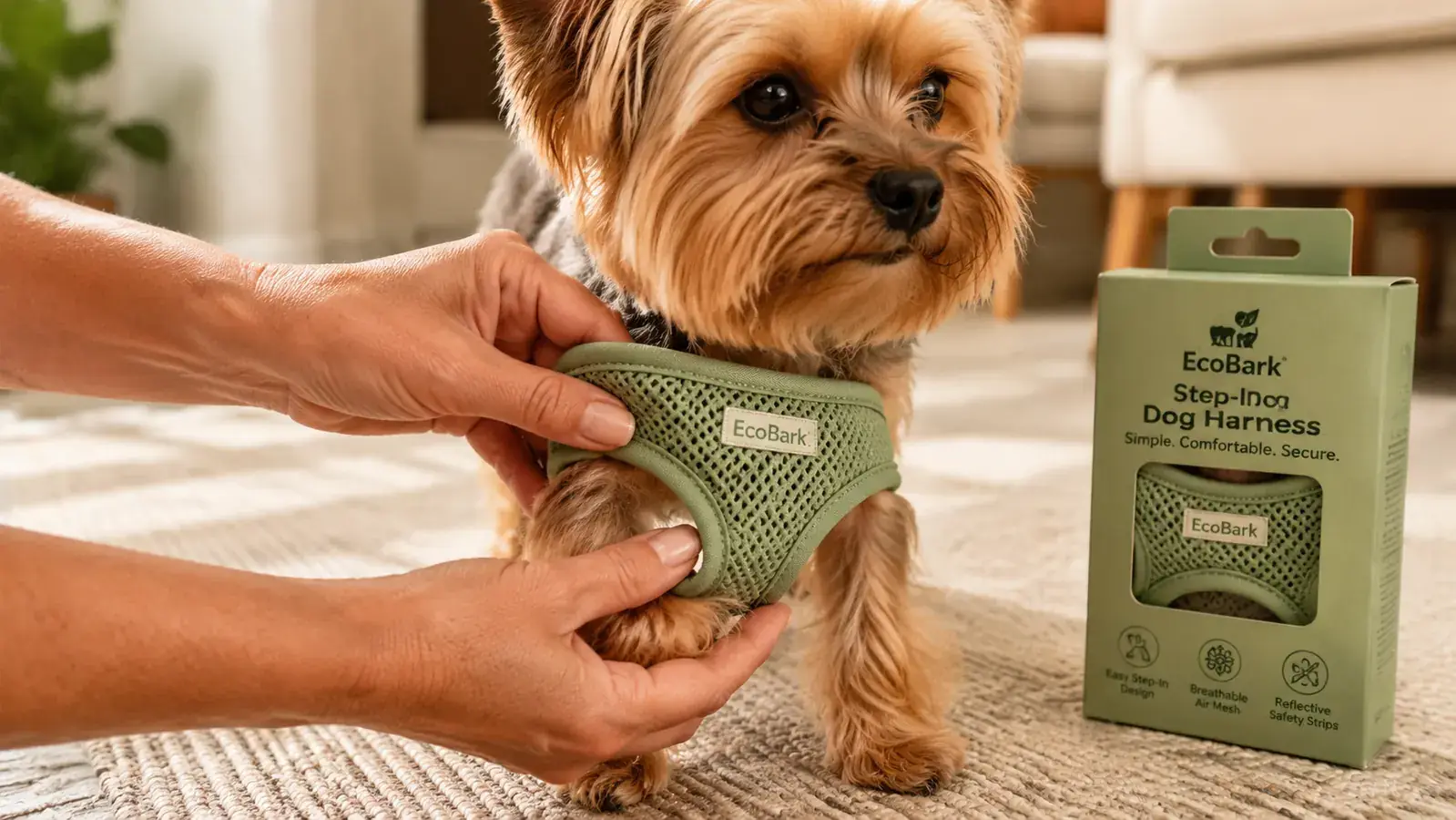
A step-in harness distributes any leash tension across the chest and shoulders rather than the throat. That alone is reason enough to switch. But for a dog like Penny who also has a trauma response to overhead handling, the step-in format is doubly valuable. She steps her front paws into the two leg loops, I lift the back panel up and clip the side releases at her ribcage, and we are done in about 12 seconds. No draping anything over her face. No asking her to hold still with her head lowered. She goes from anxious to ready in one calm motion.
She steps her front paws into the two leg loops, I lift the back panel, and we are done in 12 seconds. No draping anything over her face. No asking her to hold still with her head lowered.
Mesh Quality and Comfort Over Time
The EcoBark is made from a soft recycled polyester mesh. It is not plush, not padded with memory foam, not fleecy. It is light mesh, which in a South Florida summer is exactly right. A thick padded harness on a small dog in 87-degree humidity would be miserable. Penny shows no signs of heat irritation where the harness sits, no matting of the coat underneath, and no skin redness at the strap edges. The material is light enough that I sometimes check to make sure she is still wearing it.
After four months of daily use and 17 washes, the mesh has not pilled, stretched, or deformed. The seams at the leg holes are still clean. The stitching along the chest panel has not frayed. I did notice that the interior surface of the chest area started to look slightly duller than when it was new, a minor cosmetic thing that does not affect function at all.
The one structural issue I want to flag is the velcro tab on the back top flap. EcoBark uses a small velcro closure to keep the back strap tidy when the harness is on the dog. Over months of use and washing, that velcro collects lint, hair, and fabric fuzz from the mesh bag I wash it in. By month three, it had lost about 30 percent of its grab. The harness still functions completely without that tab doing its job, it is cosmetic, not structural. But if you are the kind of person who notices these things, you will notice it.
Sizing Accuracy and Getting the Fit Right
The most common complaint I have seen in reviews of step-in harnesses for small dogs is poor sizing. Either the chart runs small and the dog cannot get the leg holes over her paws, or the chart runs large and the harness gaps open at the sides. In Penny's case, I measured twice before ordering and the XS was accurate on arrival. The leg holes are wide enough that her paws stepped through without my having to force anything, and the chest panel sat snug without pinching.
That said, I would urge anyone buying this to actually measure their dog's chest girth before ordering, not guess by weight. A 6-pound Yorkie and a 6-pound Pug have very different chest widths. EcoBark provides a size chart in both inches and centimeters on the product page, and it is worth spending 30 seconds with a soft measuring tape before you click add to cart. My one neighbor, whose Shih Tzu is also around 6 pounds, needed the small rather than the XS because her dog has a broader chest.
Escape Resistance After 120 Walks
Penny is not a bolter. She is the opposite of a bolter: a dog who stops, sniffs, and refuses to move until she has processed every sensory input on the sidewalk. But I have tested the harness by gently trying to wiggle it off her while it is on, the way a panicked dog might try to back out of it. When it is clipped and adjusted correctly, the harness does not give. Both side-release clips have to be open simultaneously for the harness to come off, and a backing-up dog cannot achieve that accidentally.
One caveat: the harness is only secure if the chest strap is snug. I can fit two fingers underneath it comfortably. If I could fit my whole hand, the leg holes would have too much slack and a dog could potentially work a front leg free. Fit it correctly and I have no concerns about escape.
Pros
- Step-in design eliminates overhead dressing entirely, a genuine quality-of-life change for dogs with trauma responses or trachea sensitivity
- Soft recycled mesh is cool enough for hot climates and does not mat the coat or irritate skin after four months of daily wear
- Machine washable and dries quickly, realistically one wash per week handles daily use without odor or deformation
- Side-release clips and metal D-ring have shown zero rust or stress over 120 harness sessions
- Sizing chart is accurate if you measure chest girth rather than estimating by weight
- Light enough that a 5-6 pound dog barely notices it is wearing it, which matters for anxious dogs still building confidence
Cons
- The velcro tab on the back flap degrades over months of washing and daily use, losing grip and collecting lint by month three
- No padding on the chest panel, which is fine for light walking but may not be comfortable for dogs who pull hard on the leash
- Color options are pleasant but the lighter colors (mint, lavender) show staining from outdoor walking more than the darker options
- Not appropriate as a primary restraint for strong pullers or reactive dogs who lunge at other dogs, the mesh was not designed for that level of force
How It Compares to What I Used Before
Before the EcoBark, I was using a standard over-the-head vest harness that had good reviews and was technically well-made. Penny hated it. Every morning I would pick it up, she would read my body language, and she would move to the corner of the kitchen and sit there with her tail down. I thought she was just being dramatic about walks. It took me an embarrassingly long time to realize she was scared of the dressing process itself, not the walk.
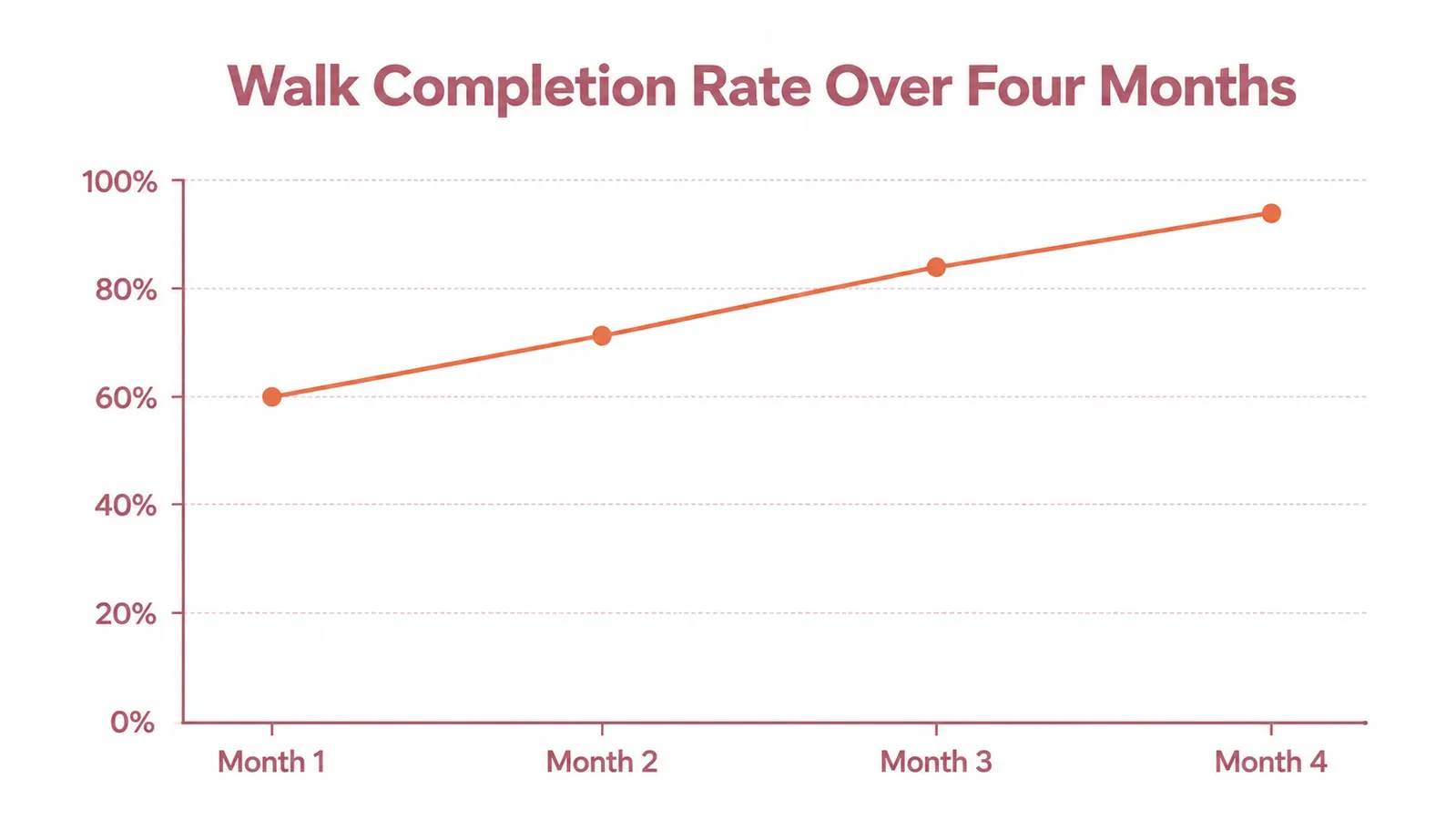
The contrast after switching to the EcoBark was almost immediate. By the end of the first week, Penny was walking to the door when she saw me pick up the harness rather than retreating. By week three, she was sitting at the door waiting. That behavioral shift did not come from training. It came from removing a stressor she had no way to communicate to me. I think about that sometimes.
If you are wondering how the EcoBark compares to other step-in options on the market, I go into that in more depth in my head-to-head comparison of the EcoBark versus the Rabbitgoo harness. The short version: both are step-in mesh harnesses in the same price range, but they have meaningful differences in how the chest panel fits and how the leg holes are shaped, which matters more for some breeds than others.
Who This Is For
This harness is right for you if your small dog is 3 to 12 pounds, has a Yorkie-like or Shih Tzu-like build, and either has a history of trachea sensitivity, a trauma response to overhead handling, or simply fights you every morning at harness time. It is also right for warm climates where a padded or fleece harness would be uncomfortably hot. If you walk in moderate weather and your dog is calm about dressing, the EcoBark will still serve you well. But if you are in a colder climate and want warmth built into the harness itself, this is not that product.
It is also worth reading my piece on the 10 reasons small dogs need a soft step-in harness instead of a collar, especially if you have been on the fence about switching from a collar for a small breed. Trachea health is the most urgent reason, but there are nine others that are worth knowing.
Who Should Skip It
If your dog is a hard puller who lunges at squirrels or other dogs, this harness is not the right match. The soft mesh is not reinforced for sustained tension, and the chest panel does not distribute force the way a padded front-clip harness would. For reactive small dogs, a front-clip harness with a padded chest piece will give you better control and be kinder to the dog's body under leash pressure. The EcoBark is a calm-walk harness for dogs who already have manageable behavior on leash and just need a gentler dressing experience.
Also, if you have a dog with a very barrel-shaped chest, a Pug, a French Bulldog, or a Boston Terrier in the small range, measure carefully and consider sizing up. The leg holes on the EcoBark are designed for the leaner builds common to Yorkies, Maltese, and small Shih Tzus. A very round chest can stress the seams at the leg openings.
Four months in, I would buy this harness again without hesitating.
The step-in design gave Penny back her morning walks. She is 5.8 pounds and wears the XS. If your small dog has trachea sensitivity or hates overhead dressing, this is worth trying before you try anything else.
Amazon Check Today's Price on Amazon →