Let me tell you the part of the Natural Dog Company Paw Soother review that nobody puts in their Amazon rating. You apply it before a walk, feeling responsible and prepared, and then your dog takes six steps onto the sidewalk and her paws immediately pick up every grain of sand, every fleck of dirt, every bit of debris that Florida concrete has to offer. The balm does work. It genuinely softens and heals dry, cracked pad tissue. But nobody warns you that the formula has a waxy phase before it absorbs, and during that window your dog's paws briefly become a lint roller for the ground. That detail alone changed how I use this product, and I want you to have it before you buy.
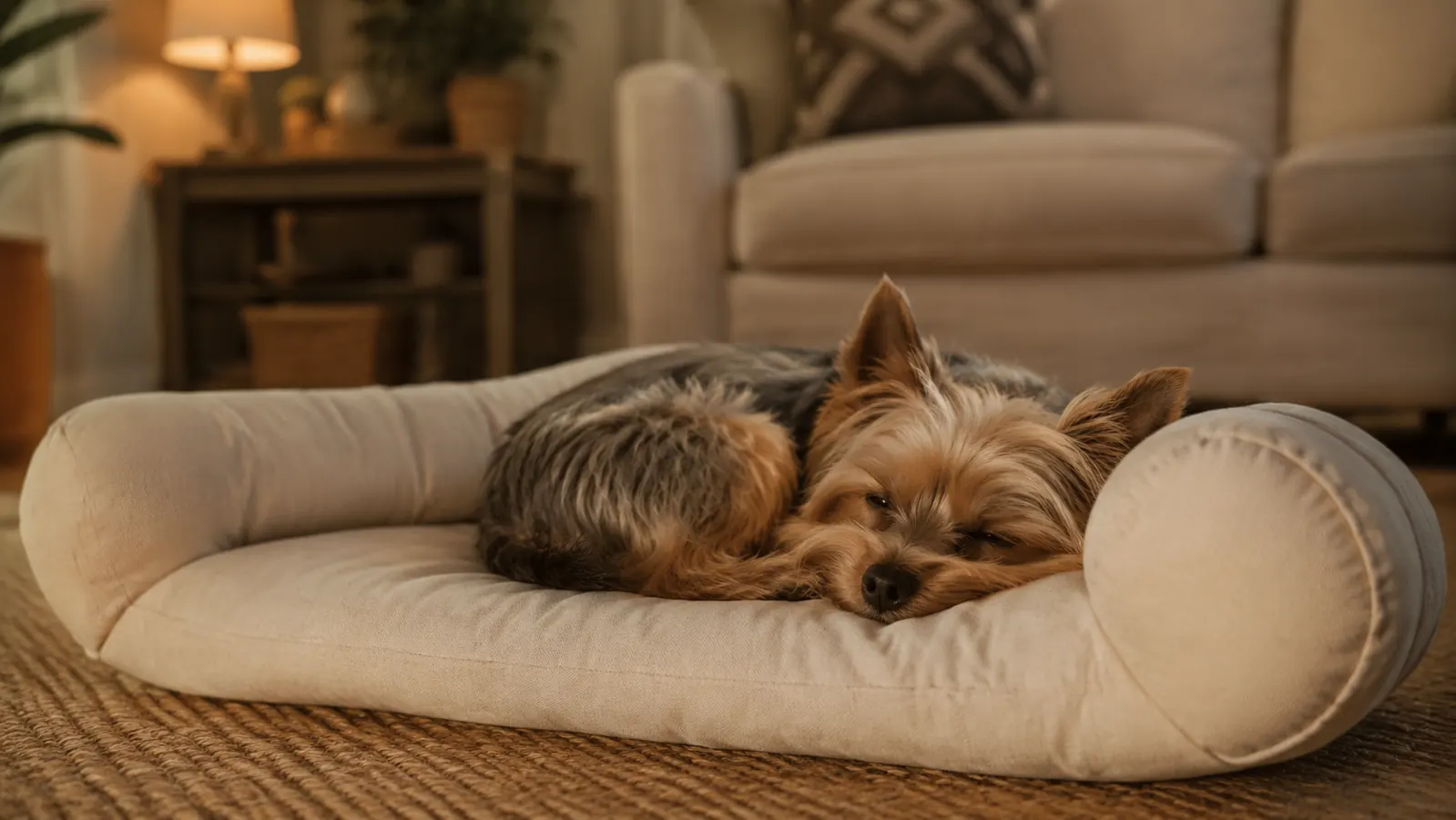
I have been using Paw Soother on my eight-pound rescue Yorkie, Mabel, for five months. Mabel is seven years old, a former breeder dog I pulled from a rescue in central Florida two years ago. Her paw pads came to me thin and rough, with the kind of cracks that told me she had been on hard surfaces her whole life without anyone paying attention to her feet. I started the balm routine out of necessity, kept it up because it worked, and along the way ran into every quirk and limitation this product has. Here is the full accounting.
Quick Verdict
Genuinely effective organic paw balm that heals cracked, dry pad tissue over time, but it has real application limitations nobody mentions: it catches dirt outdoors until absorbed, the tin is smaller than it looks, and it only works if your dog is not immediately licking it off. Apply right before bed and it earns every penny.
Amazon Check Today's Price →Your dog's cracked paws are not going to heal themselves, and coconut oil is not going to cut it.
Natural Dog Company Paw Soother uses shea butter, vitamin E, and calendula to repair damaged pad tissue from the inside out. Over 56,000 Amazon reviews. Lick-safe formula. The tin I use on Mabel has lasted five months with regular small-breed application.
Amazon Check Today's Price on Amazon →How I Have Been Using It and What I Track
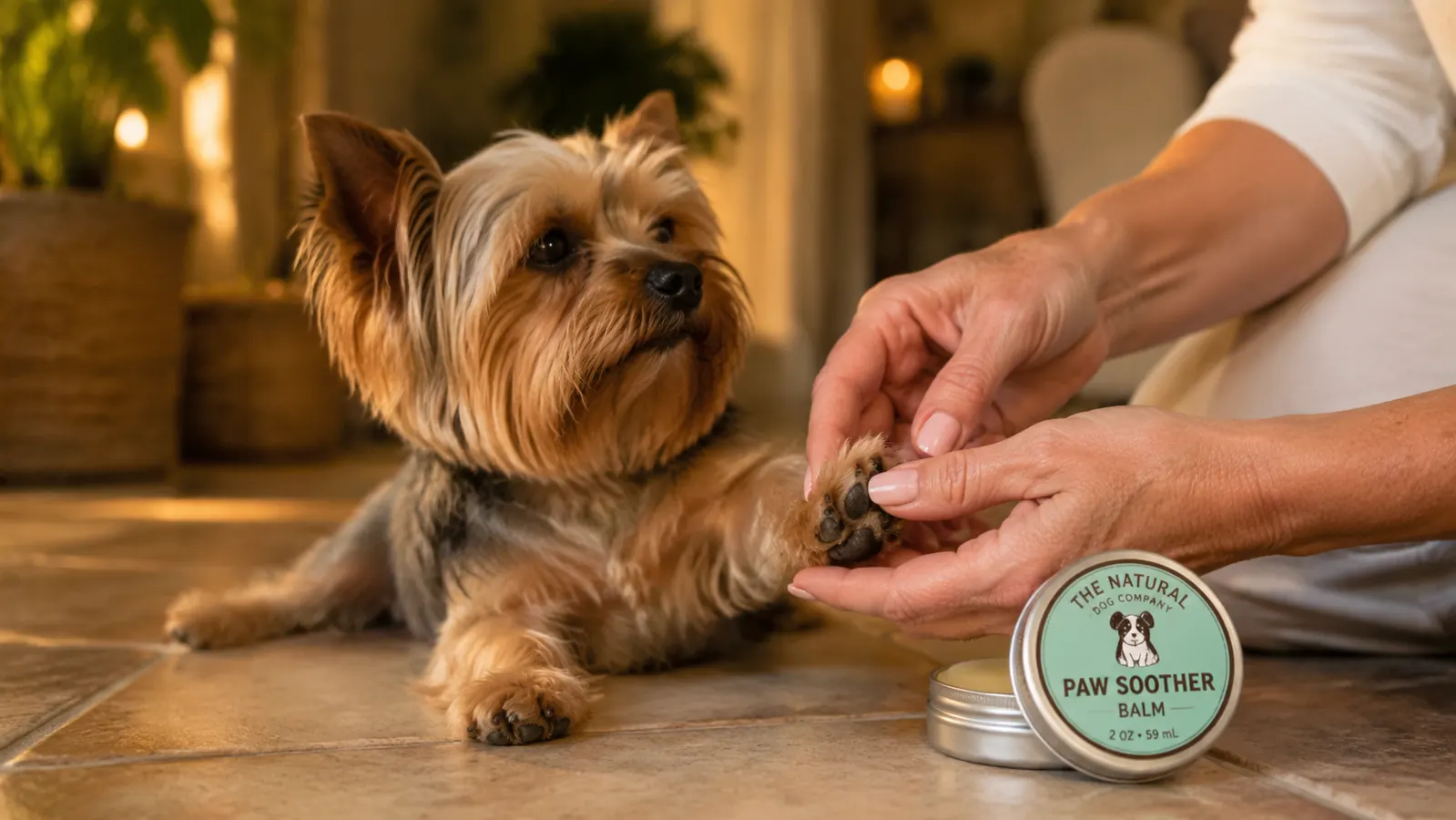
I applied Paw Soother every evening for the first eight weeks, then dialed back to four or five times a week as Mabel's pads improved. My method: wipe the paws with a damp cloth after her last walk of the night, let them air-dry for two minutes, and then work a small amount of balm into each pad with my thumb. I have always applied it indoors, in the evening, right before she settles in for the night. That timing is not accidental, and I will explain why it matters in a moment. For tracking, I take a photo of her rear pads on the first of every month because they crack the worst. Five months of photos is the dataset behind this review.
What I measure: the texture of the heel pad (rough vs. smooth), the presence of cracks at the edges, and whether Mabel is licking her paws in the evening before I apply the balm. When the routine is consistent, the heel pad stays smooth and the evening licking does not happen. When I miss three or four days, the dryness starts to return at the edges. That feedback loop has told me a lot about what this product actually does versus what it does not do.
The Dirt-Magnet Problem Nobody Puts in Their Review
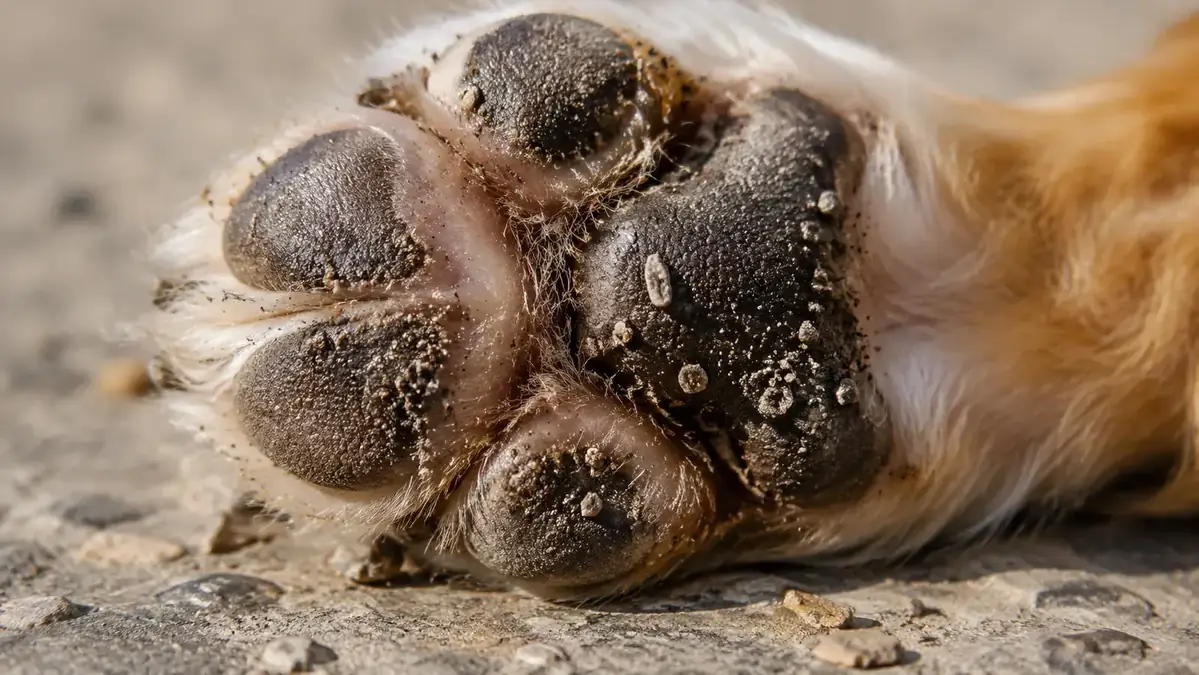
Here is the thing about Paw Soother's formula. It is a soft balm, not a dry powder or a thin serum, and it does not absorb instantly. At room temperature in South Florida, it melts to a slightly tacky surface consistency when it first contacts the paw. That tacky window lasts somewhere between three and eight minutes depending on how much you applied and how warm the pads are. If you apply it and then walk your dog on a dirt path, a sandy sidewalk, or any outdoor surface during that window, the balm grabs everything. Sand grains, small bits of dead leaf, gravel dust. When Mabel comes back inside, her paws look like they got dipped in breadcrumbs.
I learned this the hard way on week two, when I applied it before our morning walk thinking I was doing something proactive, and then spent ten minutes cleaning her paws when we came back in. The debris does not cause harm, and the balm continues to absorb once indoors, but it defeats the purpose of application and it added more wipe-down time than I was expecting. The solution I landed on is simple: apply it only when Mabel is done with outdoor activity for the night. The balm absorbs completely while she sleeps and does not get anywhere near concrete until morning. Her pads have a full eight hours of contact time with the formula before any outdoor exposure.
Apply Paw Soother right before your dog settles in for the night. Eight hours of contact time while she sleeps does more healing than any daytime application ever could, and you skip the dirt-magnet problem entirely.
The Tin Size Reality Check
The standard Paw Soother tin is two ounces. The brand describes it as lasting a long time with regular use on small breeds, and I have seen reviewers claim six months to a year from one tin. My experience on an eight-pound Yorkie with four small pads: I use a tin roughly every three to four months with four-to-five-day-per-week application. That is longer than most large-breed owners report, which tracks, but it is not the semi-annual purchase that some reviews imply.
The discrepancy probably comes from how much balm people are applying. The instructions do not give a specific amount, just 'a small amount.' I started with what I thought was a small amount and it turned out to be twice what I actually needed. Once I calibrated, a pea-sized dot per paw does the job on Mabel's pads. Any more than that and you are mostly creating extra absorption time without extra healing benefit. If you are burning through a tin in six weeks, you are likely applying too much. Dial it back. The formula is concentrated enough that less really is more.
At current pricing, a three-to-four-month supply for a small breed costs what you might spend on two vet copays. That is not a complaint. It is just the honest math so you can budget it properly. I have seen people express surprise when they reorder sooner than expected, and I suspect the disconnect is between what the label implies and what real-world usage on a daily-maintenance schedule looks like.
What Happens When Your Dog Licks It Off Immediately
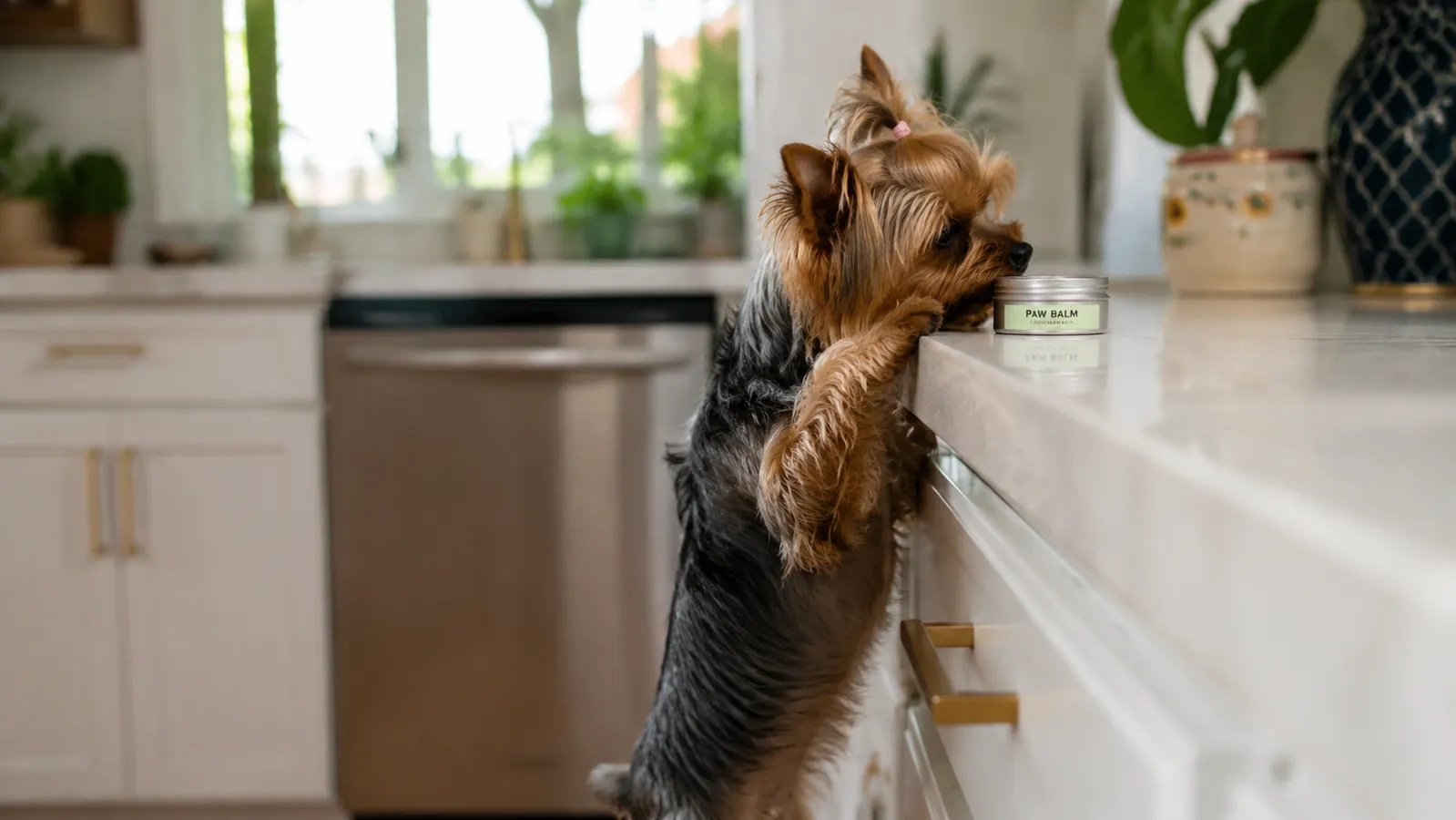
Yes, Paw Soother is lick-safe. The full ingredient list is plant-derived, and the brand is transparent about every component. Shea butter, vitamin E, coconut oil, candelilla wax, rosehip seed oil, calendula. Nothing in there is going to harm a dog who treats her own feet as a post-walk snack. So the safety question has a clear answer: licking it off is fine.
The effectiveness question is different. If your dog licks the balm off within the first two minutes of application, she removes most of it before it has had time to absorb into the pad tissue. You have applied a lick-safe, organic, fairly expensive balm and achieved approximately nothing. This was Mabel's move during weeks one and two. She would allow me to do one paw, then immediately curl around and clean that paw while I was working on paw two. By the time I finished all four, paw one was clean again.
The bedtime routine fixed this too. A tired dog is a less motivated groomer. Mabel's last walk is at nine p.m. By nine-thirty, she is settled on her bed in the corner of the bedroom and she does not have the energy to dedicate to foot-cleaning. I apply the balm, she lifts her head to check what I am doing, and then she goes back to sleep. In the morning, the balm is fully absorbed and there is nothing left for her to lick. The lick-safe designation matters because it means you do not have to police the situation. But timing it so she does not lick it before absorption means the product actually does what it is supposed to do.
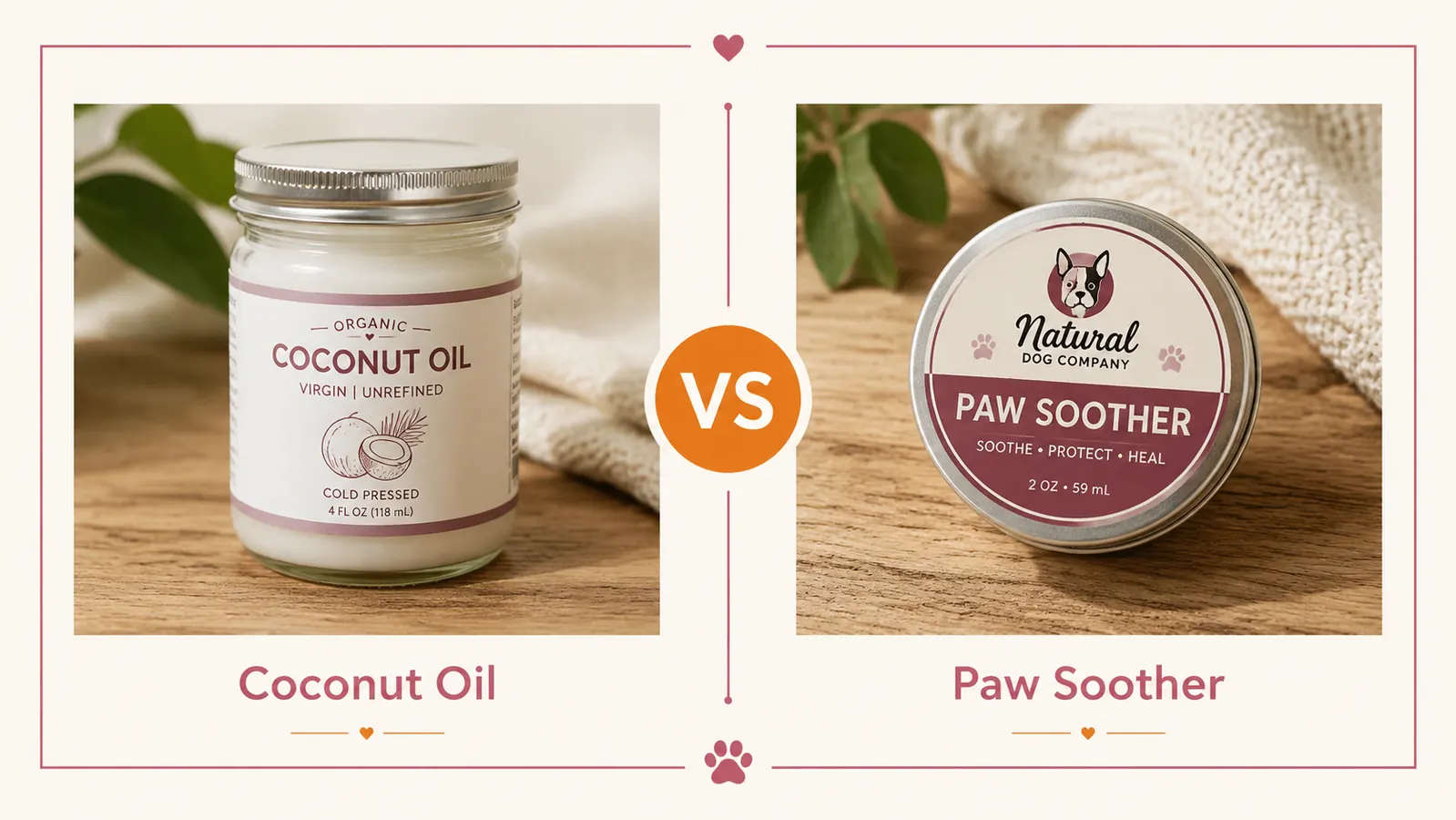
Coconut Oil vs. Paw Soother: The Honest Price Justification
I tried coconut oil on Mabel before I found Paw Soother. I know a lot of dog parents do, because it is natural, it is already in the kitchen, and it costs a fraction of any specialty balm. Here is where it falls short and where it holds up, because I do not want to be unfair to it.
Coconut oil is a reasonable moisturizer for very mild dryness. If your dog's pads are slightly rough but not cracking, and she does not self-groom compulsively, a thin application of coconut oil before bed can provide some conditioning. It is also genuinely inexpensive and safe if ingested. The problems start when you need more than mild conditioning. Coconut oil does not contain the healing compounds that plant-based balms do. It has no calendula for skin repair, no rosehip seed oil for tissue regeneration, no vitamin E in meaningful concentrations. It is a single-ingredient moisturizer, and it behaves like one.
With Mabel's pads at their worst, cracking at the rear heel pads and peeling in thin strips along the toe edges, I used coconut oil twice daily for two weeks and saw very little change. Switched to Paw Soother and saw visible improvement within ten days. The texture of the pads changed. The edge cracking stopped progressing and then reversed. Coconut oil was maintaining the status quo at best. Paw Soother was actually repairing tissue. Whether that difference justifies the price depends entirely on the condition of your dog's paws. For Mabel's level of damage, there was no contest. For a dog with perfectly healthy pads who just needs a little maintenance moisture, coconut oil is defensible.
Pros
- Repairs genuinely damaged, cracked pad tissue rather than just coating the surface
- All ingredients are plant-derived and lick-safe, no policing required if the dog self-grooms
- Absorbs without leaving a greasy residue on floors once the absorption window passes
- Soft balm texture applies easily with a fingertip, no warming required
- Formula is transparent, full ingredient list available, nothing ambiguous
- Small amount goes further than you expect once you calibrate the right dose
- Consistent bedtime application delivers measurable pad improvement within two to three weeks
Cons
- Waxy absorption window makes it a dirt and debris magnet if applied before outdoor walks
- Tin size is smaller than it looks on-screen, plan for three-to-four-month supply per small-breed dog
- Licking it off before absorption negates the benefit entirely, timing the application matters
- Not meaningfully better than coconut oil for dogs with only mild dryness, higher cost hard to justify there
- No applicator in the tin, finger application is fine but some dogs are touch-sensitive about their paws
The Ingredient List That Actually Holds Up
I want to spend a moment on why the formula earns its price for dogs with real paw problems, because this is where Paw Soother separates itself from basic moisturizers. Shea butter is the primary moisturizing base, and it is a fatty acid-rich compound that penetrates skin at a meaningful depth. Calendula oil is well-documented for its role in skin repair and reducing inflammation in damaged tissue. Rosehip seed oil contains retinol precursors and fatty acids that support cell regeneration in broken or cracked skin. Vitamin E is an antioxidant that protects skin cells from oxidative damage while supporting healing.
None of these are magic. They are ingredients with known, documented properties that happen to be combined in a formula that works well for paw pad tissue, which shares structural similarities with thick human heel skin. The ingredient argument is not marketing spin. It holds up when you look at what each component actually does. That is why I feel confident recommending it for dogs with moderate-to-severe dryness, cracking, or lick-damaged pads. For that use case, the formula is genuinely suited to the problem.
Who This Is For
Paw Soother is the right product if your dog's pads are actually damaged, not just a little dry. Cracking at the heel edges, peeling at the toe pads, white flaky texture, or a dog who licks her paws after walks because they are uncomfortable are all the right symptoms. It is also the right product for small breeds with thin, delicate pad tissue, rescue dogs who came from hard-surface environments, and any dog in a hot-pavement climate who walks regularly on summer concrete. If your dog tolerates foot handling and you can establish a consistent bedtime routine, this formula will deliver visible results within two to three weeks.
Who Should Skip It
Skip Paw Soother if your dog's pads are healthy and you just want a light preventive coating before walks. Coconut oil or a basic wax balm does that job adequately at lower cost. Also reconsider if your dog is severely touch-averse about her feet and will not tolerate the application process long enough for the balm to absorb. The product cannot help if it never stays on long enough to work. And if you are looking for protection against ice, salt, or rough trail terrain rather than healing from dryness, a wax-based product built for barrier function is a better tool for that specific job.
Five months in, Mabel's rear heel pads are smooth. That alone is worth the cost of a small tin.
Natural Dog Company Paw Soother has a 4.4-star rating from over 56,000 reviews, and the formula earns it when you use it right. Apply a pea-sized amount per pad, at bedtime, every night. Give it three weeks. The difference in pad texture is visible. Check current pricing on Amazon using the button below.
Amazon Check Today's Price on Amazon →