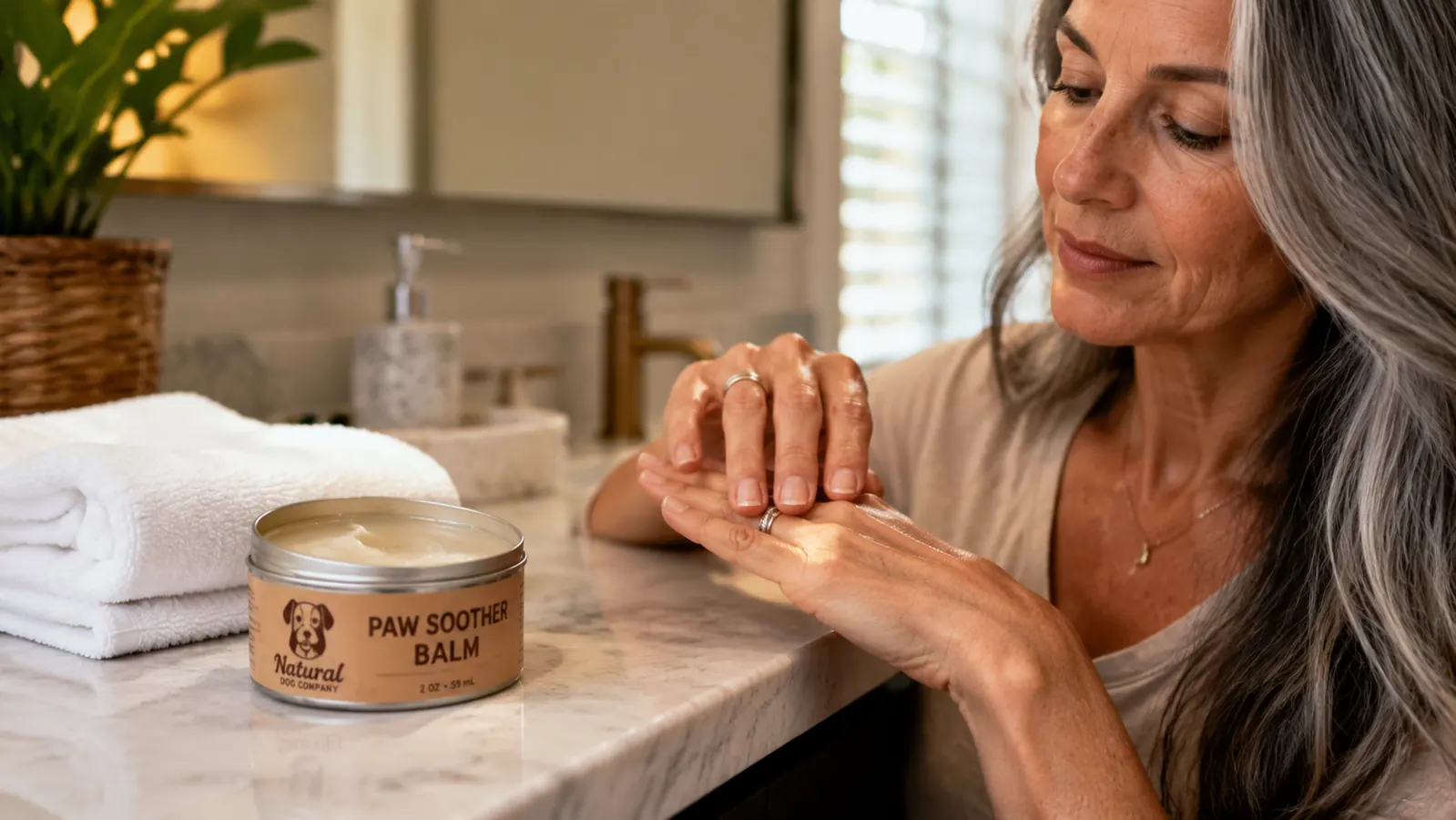

I bought the first tin of Natural Dog Company Paw Soother in late May. My nine-pound rescue Yorkie, Biscuit, had developed the kind of dry, rough heel pads that happen when a small dog spends a South Florida summer walking on concrete that could fry an egg by eight in the morning. By early June, I was doing nightly applications. By October, I was on my second tin and Biscuit's pads had not looked better since I adopted her two years ago. This is not the review of someone who used a product for three weeks and declared it healed. This is five months of daily evening application, two tins, one rainy season, and the arc of what long-term paw maintenance actually looks like on a small dog with chronically dry pad tissue.
Biscuit is a seven-year-old Yorkie who came to me from a rescue in Ocala, former breeding dog, pads that showed it. The floors of wire-cage breeding facilities do not do paw pads any favors, and by the time she arrived she had heel pads that felt like rough sandpaper and cracked along the rear edges every summer. I had tried other approaches before landing on Paw Soother. What I found with this one was that the first two months handled the acute healing, and months three through five showed me something the shorter-term reviews do not cover: what a consistent paw care routine does for chronic dryness when you stay with it long enough to see the full picture.
Quick Verdict
Natural Dog Company Paw Soother is the best long-term paw maintenance tool I have found for a small dog with chronically dry pads. The healing curve is real, the routine gets easier by week four, and five months in the pads are genuinely transformed. The scent fades to nearly nothing by month three, the tin lasts longer than expected on a small breed, and a nervous dog who once yanked her feet away now barely reacts to the routine.
Amazon Check Today's Price →Rough, cracked pads do not fix themselves, and a single application will not hold against South Florida concrete.
Natural Dog Company Paw Soother is built for long-term daily use. Shea butter, vitamin E, and calendula in a 100 percent organic, lick-safe formula. Over 56,000 Amazon reviews. The tin I started in late May was still going in August on a nine-pound Yorkie applied nightly.
Amazon Check Today's Price on Amazon →How I Have Been Using It and What Changed Each Month
My routine has been consistent since week one: wipe paws with a damp cloth after the last walk of the night, let them dry for two minutes, apply a small amount of Paw Soother to each pad with my thumb. The whole process takes about three minutes, maybe four when Biscuit decides she wants to investigate the tin. I do it right before she settles in for the night, because a tired dog is a cooperative dog, and because overnight contact time is genuinely more productive than daytime application when she might be walking on the product before it absorbs. What I did not expect was how clearly the months broke into phases.
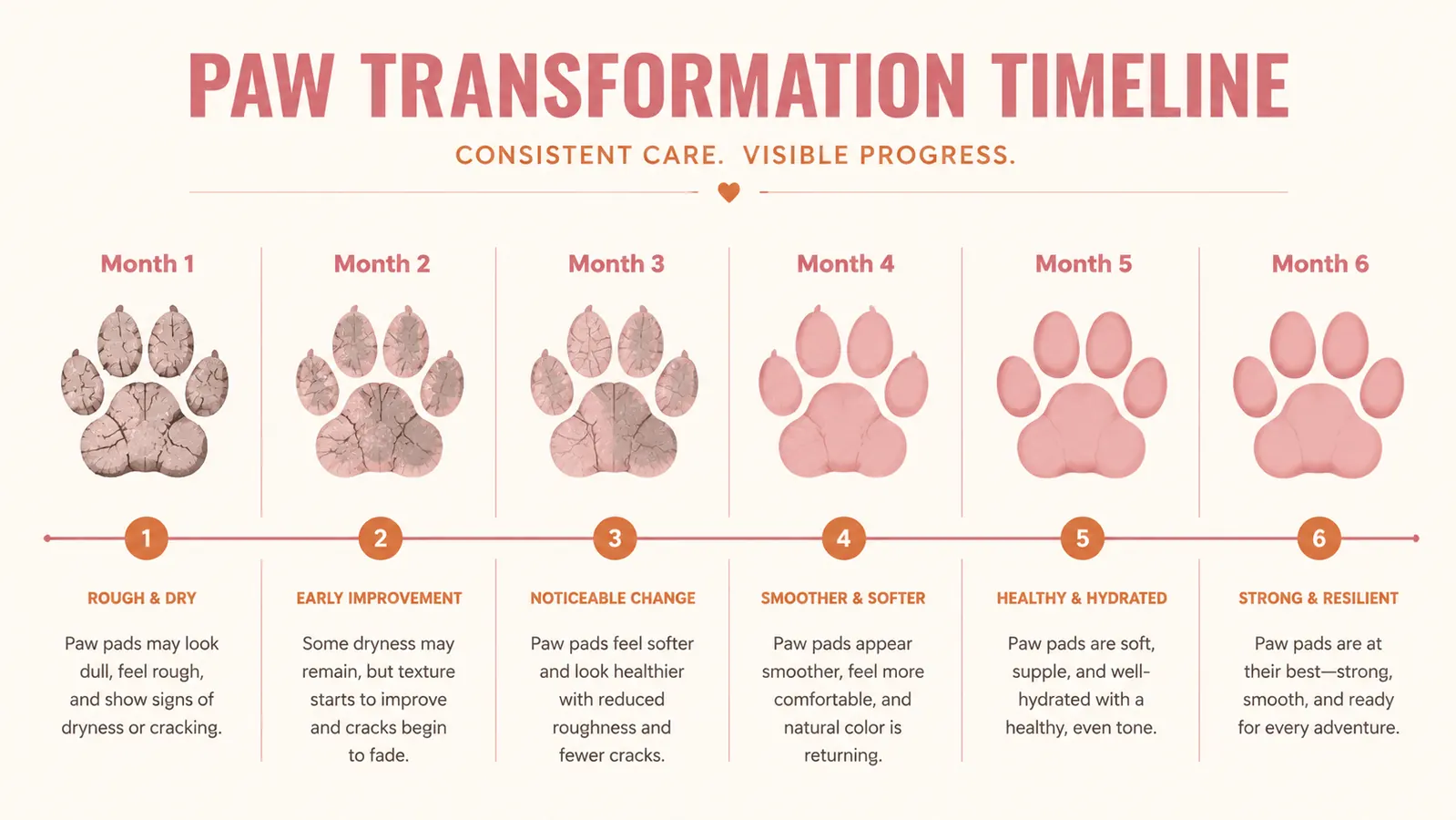
Months one and two were about repair. Her heel pads, which had been rough and white at the edges with fissures along the rear rim, started showing visible improvement around day twelve. By the end of week four the edge cracking had stopped opening further and was beginning to close. By the end of month two the rear heel pads had gone from rough sandpaper to something that felt closer to a supple leather. I tracked this with monthly photos of her rear pads, which sounds obsessive, but if you have ever watched a rescue dog's pads slowly worsen and not known what to do, you understand the impulse. Month three was the first month I noticed the pads staying stable without the intensive repair phase. I was still applying nightly but I was no longer managing active damage. I was maintaining healthy tissue.
The Scent Arc Nobody Talks About
New Paw Soother has a faint herbal scent. Not strong, not medicinal, somewhere between a warm shea lotion and a mild botanical oil. It is not unpleasant. In month one I barely noticed it beyond the first application. By month two, Biscuit had stopped even sniffing the tin when I opened it, which told me she had categorized it as routine and harmless. But here is the thing nobody mentions in the shorter-term reviews: by month three, the scent was almost entirely gone. I could open the tin and smell nothing distinctive.
I am not sure if the volatile aromatic compounds in the formula dissipate over time as the tin opens and closes, or if the lighter scent ingredients absorb into the remaining balm differently over months of use. What I can tell you is that the product at month five smells like almost nothing. That is not a complaint. It is useful information if you are buying this for a dog who is scent-sensitive, or if you have been avoiding it because you assumed paw balms would smell like something you would have to explain to houseguests. The herbal note fades out. What remains is a neutral balm with no particular odor, just the faint warmth of shea butter. The effectiveness did not change with the scent. The pads stayed in good condition. The scent was apparently not load-bearing.
When the Routine Got Easier: The Dog's Reaction Over Time
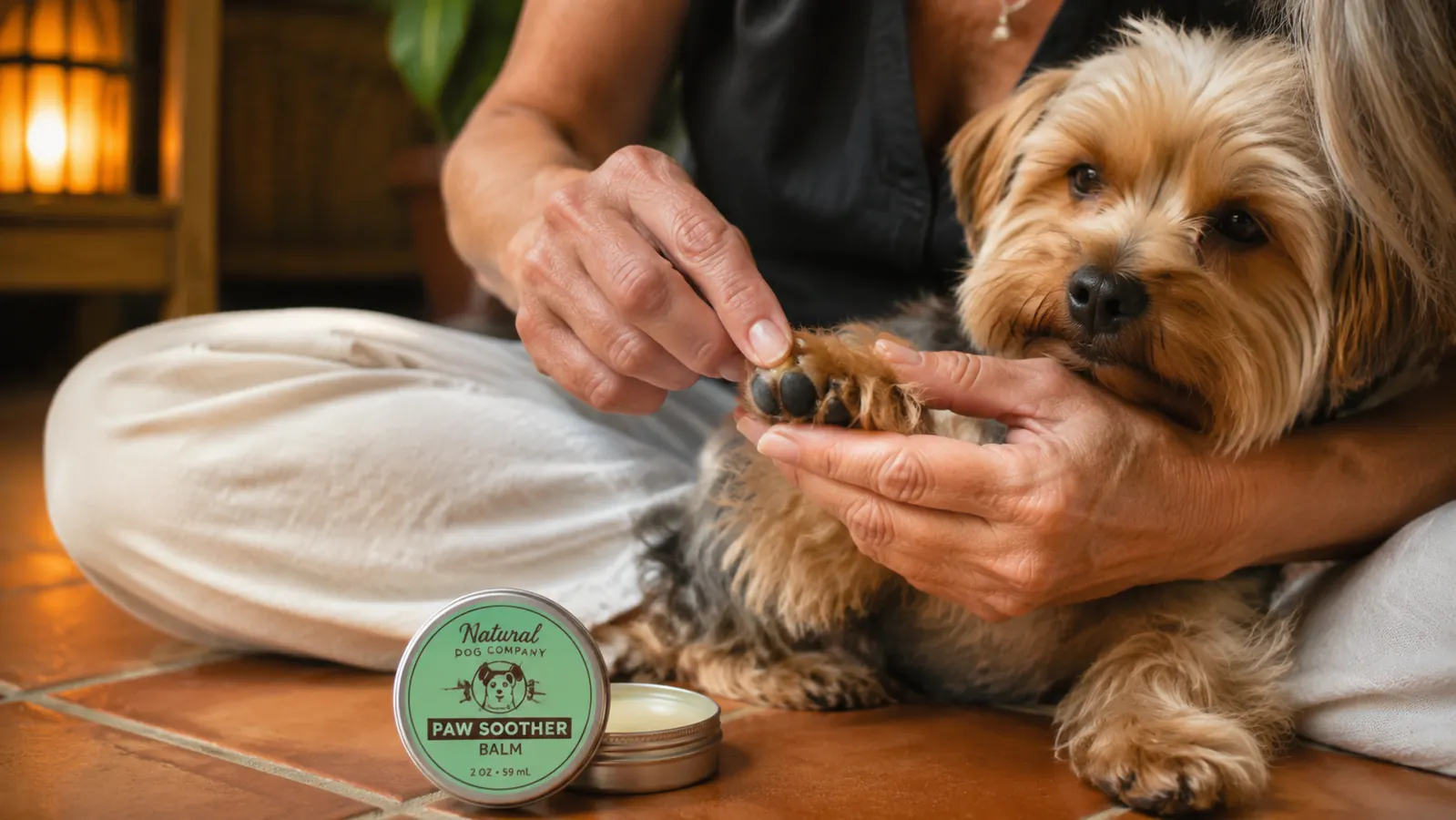
I want to spend time on this because it matters, particularly for rescue dogs who came from backgrounds where human hands on their bodies were not always a gentle experience. When I started the Paw Soother routine in May, Biscuit would tolerate the first paw and then try to pull the second one away. She was not aggressive about it. She was just done. She would look at me with the patient resignation of a dog who has learned that humans sometimes do strange things, and she would tug her foot back toward herself. I held each paw with a light, firm grip and kept going, but it added time and she would occasionally succeed in yanking free mid-application.
By week four, the tugging had mostly stopped. By the end of month two, she was extending her paw toward me when I reached for it, which, if you know rescue Yorkies, is a small landmark. By month four, the application had become a routine she did not resist at all. She would lie on her side on the tile floor beside me, let me work through all four paws, and then stand up and walk to her bed. The whole thing had become part of the evening sequence, filed alongside dinner and the final walk as something expected and unremarkable. I think part of this is simply desensitization and trust-building. But I also think part of it is that paws that are no longer cracked and uncomfortable are paws that do not mind being handled. Healthy tissue tolerates touch differently than damaged tissue.
By month four, Biscuit was extending her paw toward me when I reached for it. Rescue Yorkies do not do that unless something has shifted. The routine had become familiar enough, and her pads comfortable enough, that the whole thing stopped being an ordeal.
Tin Durability: What Five Months Actually Uses
The standard Paw Soother tin is two ounces. My first tin lasted from late May through mid-August on nightly application, roughly eleven weeks, which is around 77 applications. That is on a nine-pound Yorkie with small pads, using what I would describe as a moderately conservative amount: a pea-sized portion per pad, sometimes a touch more on the heel pads that were the most damaged. I opened my second tin in mid-August. As of the end of October, that second tin still has what I estimate as one-third of the product remaining.
So across five months of nightly use, I have gone through approximately one and a half tins. That is useful information to set realistic purchase expectations. Some reviewers claim a tin lasts six months. I have not found that to be the case on a daily maintenance schedule. Three to four months per tin on a small breed feels like the honest number. What changes that math is application amount. If you are putting on a generous coat, the tin goes faster. If you calibrate down to the minimum effective amount, which is genuinely smaller than most people start with, you can stretch it considerably. A pea-sized dot per pad does the job. More than that just extends the absorption window without adding healing benefit.
Chronic Dryness vs Single-Use Healing: The Long-Term Difference
Here is the distinction that I think most reviews miss because they stop before they see it. There is a difference between what Paw Soother does in the first two to three weeks, which is visible repair of existing damage, and what it does in months three through five, which is something I would call threshold maintenance. When I started, Biscuit's pads had a damage backlog built up from years of hard-surface kennel environments and two summers of South Florida walking. The balm was actively repairing fissures, smoothing texture, and reducing the inflammation that comes with cracked pad tissue.
By month three, that repair phase was complete. What I was doing was keeping the pads above the threshold where damage begins. South Florida pavement still exerts heat stress on pad tissue every morning walk. The difference is that pad tissue that has been conditioned for three months has more capacity to absorb and recover from that stress without breaking down into cracking. I have tested this indirectly: I skipped four consecutive nights in late September because I ran out and had not reordered in time. By night three of the gap, Biscuit started her evening foot-licking again, which is her signal that the pads are uncomfortable. By night five, the heel edges were beginning to look dry again. I restarted the routine and the licking stopped within two days. That cycle told me something important: long-term use builds a cumulative conditioning that does not disappear overnight, but it is not permanent either. The routine needs to stay routine.
The South Florida Summer Context
I want to put the five-month timeline in its environmental context, because where you live changes what long-term paw care looks like. Biscuit's first two months on Paw Soother ran through June and July in South Florida, which is peak rainy season. Sidewalks are wet in the mornings, then baking by mid-morning, then wet again by afternoon thunderstorms. Humidity keeps the air heavy but it does not protect pad tissue from hot concrete surface temperatures, which can still reach 120 degrees or above even on overcast summer days.
By month four, we were into October, which in South Florida means temperatures dropping from the low 90s to the low 80s and the rainy season tapering off. The pavement becomes less punishing. What I noticed was that Biscuit's pads in October required less intensive maintenance than they had in June. The same nightly routine produced noticeably better pad condition with less work. That tracks with the lower thermal stress. The balm was doing the same thing it always did; the environment was just cooperating more. If you are in a cooler climate, or in a season with lower pavement temperatures, you may find the balm works faster than it does in peak summer heat. If you are starting this in the dead of summer in a hot-pavement region, manage your expectations for the first four to six weeks. The formula is working. The environment is working against it.
Pros
- Genuine long-term repair of chronically dry, cracked pad tissue, not just surface coating
- Nervous rescue dogs acclimate to the routine by weeks three to four, cooperative application by month two
- Scent fades to near-neutral by month three, a quiet benefit for scent-sensitive dogs or households
- Tin lasts a realistic three to four months on daily small-breed use, manageable cost for ongoing care
- Lick-safe formula means no monitoring required if the dog self-grooms after application
- Overnight contact time produces better results than daytime use, a small adjustment with meaningful impact
- Cumulative conditioning effect builds pad resilience over months, not just one-time healing
Cons
- The first four weeks require consistent daily application without visible reward during the first week or two
- A four-to-five-day gap in routine allows dryness to begin returning, this requires a standing reorder habit
- Two-ounce tin is smaller than it looks on screen; budget for three to four months per tin at daily small-breed use
- Hot-climate summer heat works against the balm in the early repair phase; results take slightly longer in peak season
- Application requires paw-tolerant dogs or patient desensitization for rescue dogs with handling sensitivity
Who This Is For
Natural Dog Company Paw Soother is the right product for dog owners who are willing to make a nightly routine part of their evening, for small dogs with genuinely dry, cracked, or heat-damaged pads, and especially for rescue dogs whose paw history reflects years on hard surfaces. If your dog has pads that have been chronically rough through multiple seasons despite occasional treatment attempts, this is the product that will address it, provided you give it the consistent daily application it needs. It is also the right fit for warm-climate dog owners who deal with hot-pavement walking year-round rather than seasonal protection needs.
Who Should Skip It
Skip this if your dog's pads are healthy and you are looking for a pre-walk protective barrier against salt, ice, or rough trail terrain. For that specific use case, a wax-based barrier product is the better tool. Also skip it if you cannot commit to consistent nightly application, because sporadic use does not produce the cumulative conditioning that makes this product worth its cost. If your dog has severely cracked pads with active bleeding or deep fissures, start with a vet visit before relying on a balm. What Paw Soother handles well is chronic dryness and the early-to-moderate cracking that comes from environmental exposure. It is not a wound treatment.
Five months in, Biscuit's heel pads are the softest they have been since I adopted her. That took a routine, not a miracle.
Natural Dog Company Paw Soother has a 4.4-star rating from over 56,000 Amazon reviews. The formula is 100 percent organic and lick-safe, and with daily bedtime application on a small breed the tin goes further than you expect. If your dog's paws have been rough for more than one season, this is the product that finally holds.
Amazon Check Today's Price on Amazon →