
It was a Tuesday afternoon in October, about eighteen months after I brought Penny home from the rescue. We were crossing the street two blocks from the house when she twisted backward, went completely boneless the way only a determined six-pound Yorkie can manage, and slipped straight out of her collar. One second she was on leash. The next she was standing in the middle of the road, blinking at me like she had no idea what had just happened.
My heart stopped. A car was coming. I dropped to my knees, held very still the way her trainer had taught me, and spoke her name once, softly. Penny looked at the car. Looked at me. Trotted over and sat on my shoe. I clipped the leash to her collar with shaking hands and walked home without saying a word the entire way. Then I sat on the kitchen floor and cried for a good fifteen minutes. That moment is what led me to the EcoBark step-in harness, and this is the story of how we got there.
That was the moment I accepted what I had been half-denying for months: a collar was not the right fit for Penny. She came from a puppy mill where she spent her first four years in a small cage. She has a thickened trachea, a nervous disposition, and absolutely no interest in walking calmly on a leash when her instinct says to freeze and then bolt. A collar on a dog like that is a liability. I needed a harness. What I did not know yet was how many harnesses I would go through before I found one she would actually walk in.
A collar on a dog like Penny is a liability. I needed a harness. What I did not know was how many I would go through before I found one she would actually walk in.
The first harness I tried was a slip-over vest style, the kind you lower over the dog's head. Penny shuts down the moment anything comes near her face. She went completely still, refused to move, and spent the entire walk staring at the ground with her ears flat. I returned it that same week.
Harness number two was a step-in design, but the straps were stiff nylon webbing and the chest plate dug into her sternum. She walked about half a block before she started doing that slow, deliberate sit-down that means she is done cooperating. I finished the walk carrying her. Harness three was a Y-front with a chest strap you thread through a loop. The buckle was directly on her shoulder blade and she developed a little hot spot there within three days. Out.
Harness four was a padded mesh step-in I found at a local pet boutique. She wore it twice. Both times she backed out of it halfway down the driveway with the casual confidence of a dog who has made her position very clear. I stood there holding an empty harness while Penny watched me from the grass. That was February. By March I was genuinely considering whether we would ever have a normal walk.
If your small dog backs out of harnesses or shuts down in them, the EcoBark step-in is worth a try before you give up on walks entirely.
Soft eco-friendly mesh, step-in design with no overhead fuss, and adjustable at the chest and back so it actually fits a narrow Yorkie frame. Under $17 at today's price.
Amazon Check Today's Price on Amazon →A neighbor mentioned the EcoBark harness when we ran into each other at the mailbox. She has a Maltese with similar nervous-dog energy and said it was the only harness her dog did not immediately try to defeat. I ordered it that evening. It arrived in two days and I spent about five minutes looking it over before I tried it on Penny.
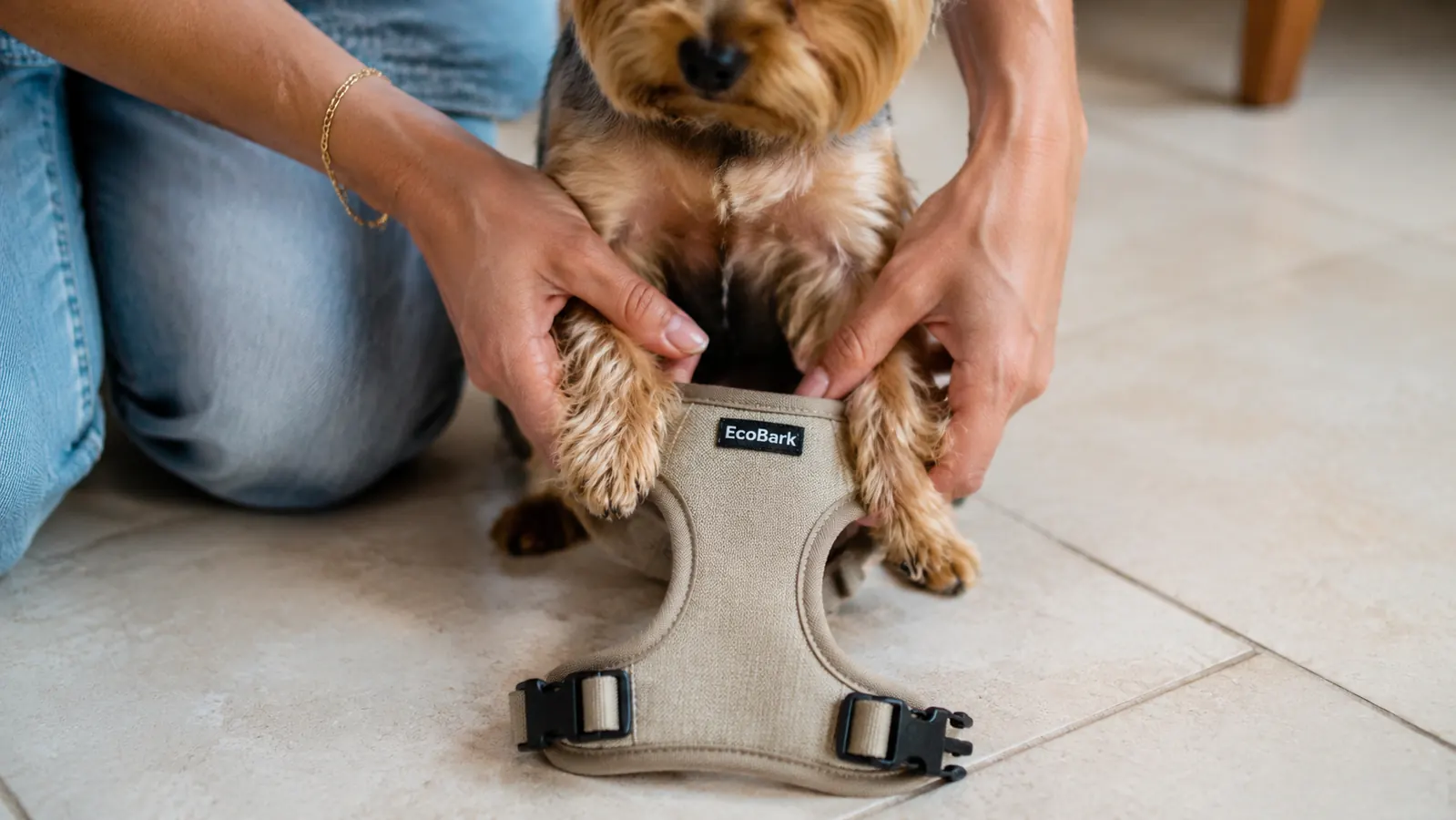
The material is a soft open-mesh fabric, not stiff nylon, and it has enough stretch that it molds to the body instead of sitting rigid against it. The step-in design means Penny puts her two front paws in, I lift the harness up, and the two halves clip together on her back with a single buckle. Nothing goes over her face. Nothing slides around her neck. There is a D-ring on the back for leash attachment and a second one on the chest if you want front-clip control. I use the back ring. It took about forty-five seconds to adjust the fit the first time and I have not touched the adjustment since.
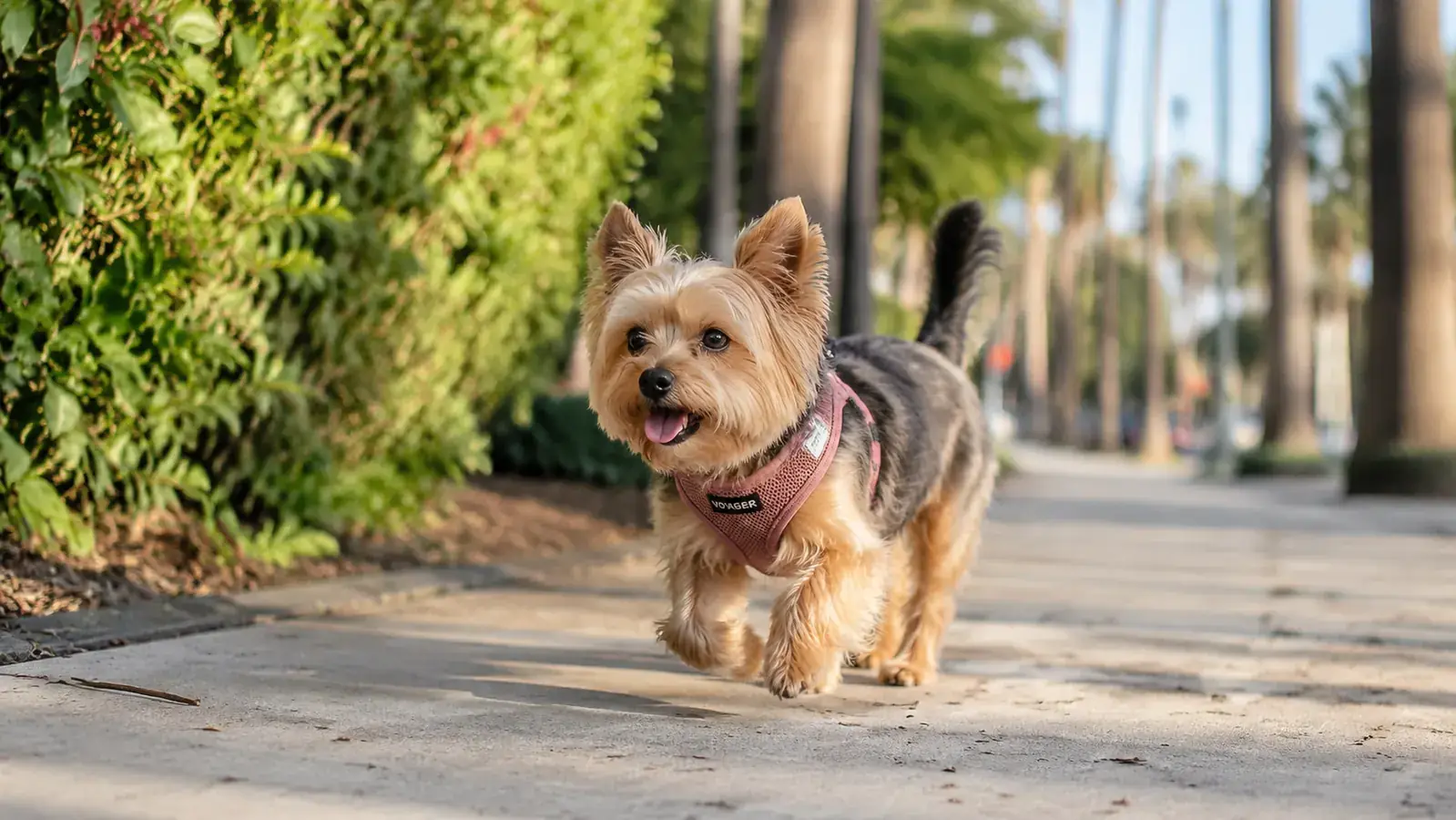
The first walk with the EcoBark was not a revelation in the dramatic sense. Penny did not suddenly become a different dog. She still stopped to sniff every five feet and she still did one nervous circle at the corner where a truck had backfired the previous week. But she walked. She did not freeze. She did not back out of the harness. She did not sit down in protest halfway through the block. We made it all the way around the pond behind the neighborhood, about a third of a mile, and when we got back to the house she did something she had never done before after a walk: she went straight to the door and waited, tail moving. She wanted to go again.
What I Would Tell You If We Were Sitting at My Kitchen Table
If you have a small anxious dog who has been through something hard, a harness is not just about safety. It is about whether the gear you put on her communicates something calm and manageable, or whether it adds one more layer of stress to a body that is already on alert. Penny does not love walks the way a confident, bouncy Golden loves walks. She tolerates them, and on good days she seems to genuinely enjoy them, and I consider that a real win given where she started. The EcoBark did not fix her anxiety. But it removed a layer of friction that was making everything harder. That matters.
It is under $17. The mesh washes easily, which matters in South Florida summers when everything gets damp. The sizing runs accurate for toy breeds, so measure your dog's girth before ordering and trust the chart. For Penny at 6.3 pounds and a 12-inch chest, the XXS fits precisely. One honest note: the buckle is plastic and I would not trust it for a strong, determined escape artist over 15 pounds. For a small nervous dog who is not pulling hard, it holds fine. We are fifteen months in and the original buckle is still solid.
I still have the collar. It lives on Penny's ID tag and sits in the kitchen drawer. We use it for vet trips when I need the tag accessible. For every walk, every errand, every moment she is outside, it is the EcoBark. She steps in without hesitation now. That is not nothing. That is the whole thing, honestly.
For a small dog who shuts down in head-over harnesses or slips out of nylon step-ins, the soft mesh EcoBark is the one I recommend without hesitation.
It fits narrow toy-breed frames, washes well in South Florida heat, and the step-in design means no overhead anxiety for rescue dogs with face sensitivity. Check today's price below.
Amazon Check Today's Price on Amazon →