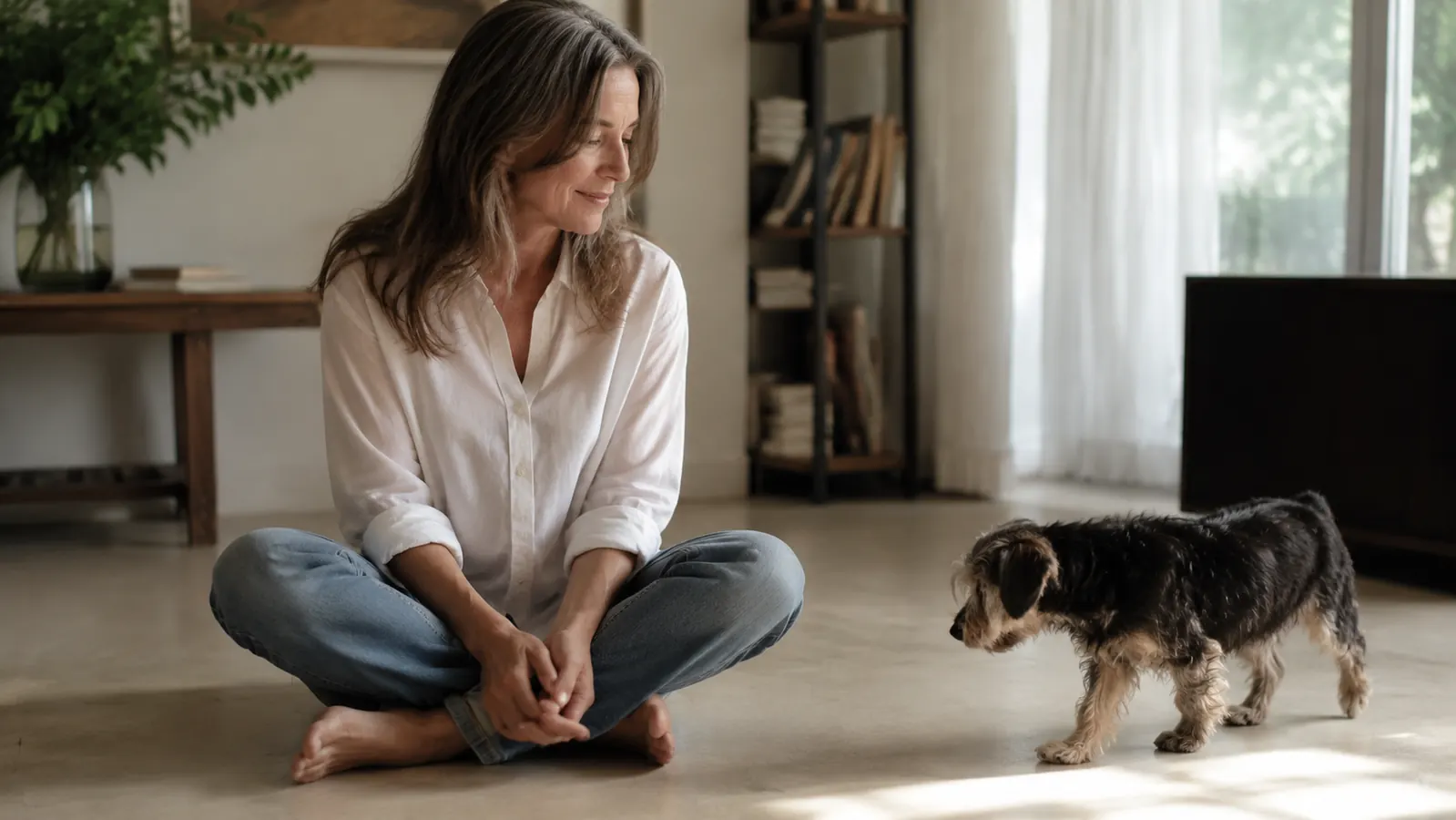
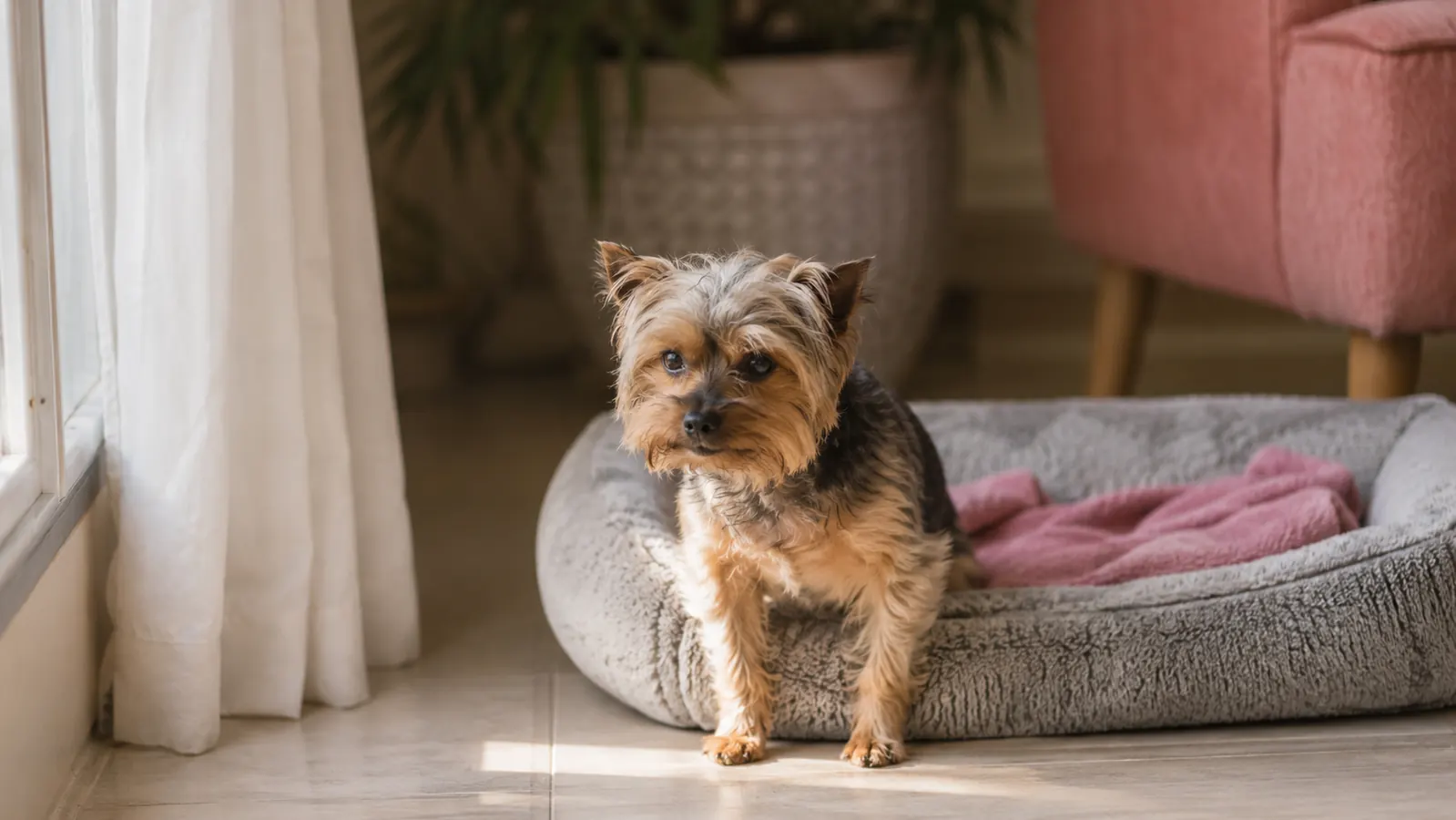
When Penny first arrived from the puppy mill rescue, she startled at the sound of a spoon hitting a bowl. She would freeze in the hallway for twenty minutes before deciding it was safe to come into the kitchen. She trembled through thunderstorms, during car rides, and sometimes for no reason I could identify at all. I had owned dogs my entire life. I had never lived with a dog who was this afraid of the world.
Anxious rescue dogs are not broken. They are dogs who learned, in the most formative windows of their lives, that people and environments are unpredictable and often dangerous. That learning does not erase easily. What it responds to is something slower and less glamorous than any quick fix: a consistent, low-pressure environment, a human who reads body language and backs off when asked, and a methodical rebuilding of trust, week by week. This guide lays out that process in the order it actually works. (For the small dogs who do need a calming supplement on top of the routine, I use Zesty Paws Advanced Calming Soft Chews. More on that in Step 6.)
If your rescue dog is trembling through everyday moments, a calming supplement can take the edge off while you do the real trust-building work.
Zesty Paws Advanced Calming Soft Chews use Suntheanine L-Theanine to support composure without sedation. They are not a substitute for the steps below, but used alongside them, many owners notice a meaningful difference. Rated 4.2 stars from over 5,500 reviews.
Amazon Check Today's Price on Amazon →Step 1: Audit Your Home for Involuntary Stressors
Before you begin any training or counterconditioning, walk through your home as if you were a small, frightened dog encountering it for the first time. Notice the ceiling fans running at high speed. The TV left on a news channel with raised voices. The children who dart through hallways. The front door that slams when the wind picks up. The washing machine that thumps in a back room. These are not dramatic things. They are ordinary household sounds that a well-adjusted dog ignores. To an anxious rescue dog, any of them can be a daily trigger.
Start with sound management. Lower the TV volume and switch to something steady, like music or ambient nature sounds, which many rescue dogs tolerate far better than the unpredictable peaks of dialogue and commercial breaks. Prop doors open so they cannot bang shut unexpectedly. Add a door stopper to the heaviest exterior door. Identify which room in your house is naturally quietest and plan to make that room your dog's primary safe zone in the next step.
This step takes one afternoon and costs nothing, but it removes triggers that would otherwise undercut everything else you do. An anxious rescue dog cannot learn that you are safe if her nervous system is being pinged by random stimuli all day. Reduce the noise floor first.
Step 2: Build a Dedicated Safe Zone
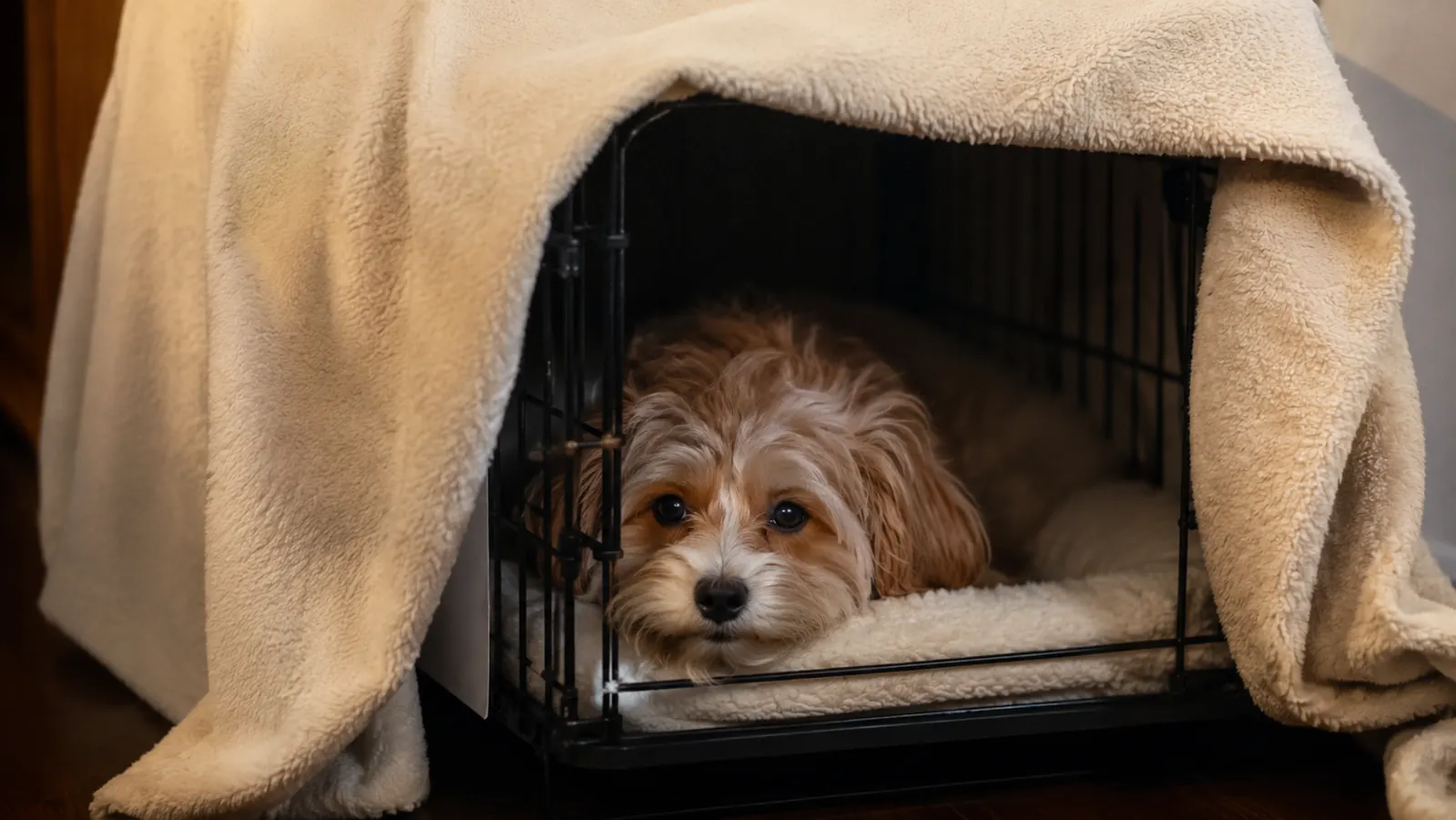
A safe zone is not a punishment corner. It is the one spot in your home where your rescue dog can go and be guaranteed that nothing will approach her, nothing will startle her, and she can exhale. Ideally, it is a crate or a pen in a low-traffic corner of a quiet room, covered on three sides with a breathable blanket to create a den-like enclosure. Small dogs like Yorkies and Shih Tzus have a strong denning instinct, and a covered crate activates that instinct in a way that an open dog bed in the middle of a room does not.
Line the crate with something soft and with consistent scent. I used an old sweatshirt of mine, worn enough that it carried my smell without any detergent sharpness. A familiar scent from a trusted person is one of the most reliable calming signals for a dog who is still deciding whether you are safe. Place the safe zone in the room where the family spends the most time together, but off to the side rather than in the center of foot traffic. You want your rescue dog to be able to watch the household without being in the middle of it.
Never use the safe zone as a time-out. Never reach into it to pull the dog out. If she is in there and you need her, kneel at the opening and wait. The rule is simple: anything that happens in the safe zone is the dog's choice. That consistency is what makes it actually safe.
Step 3: Learn to Read the Body Language Your Rescue Dog Is Already Sending
Most anxious rescue dogs have been communicating their stress signals for months or years before anyone listened. Lip licking, yawning at odd moments, a whale eye where you can see the whites of the eye, a tucked tail that never fully relaxes, ears pinned flat, a rigid body when you reach to pet, or a dog who turns their head away the moment you make eye contact. These are not random. They are a vocabulary, and learning it changes everything about how you interact with an anxious rescue dog.
The goal in this step is simple: when you see a stress signal, you stop and back off. Not forever. Just in that moment. If you reach toward Penny and her lip curls, very slightly, I stop reaching. I sit back. I look away. Then I wait for her to decide what to do next. That single habit, practiced consistently, communicates something more powerful than any amount of soothing talk: it tells her that her signals are heard and respected. That she has some control over what happens to her. For a dog who spent years in a puppy mill with no control over anything, this is not a small thing.
An anxious rescue dog is not asking you to fix her. She is asking you to prove, slowly and repeatedly, that you are the safest thing in the room.
Step 4: Establish a Predictable Daily Routine
Rescue dogs with anxiety often come from environments where nothing was predictable. Feeding happened when it happened. People appeared and disappeared without pattern. Stimulation and quiet alternated randomly. The antidote to that history is routine so consistent that your dog can begin to anticipate what comes next. Wake-up happens at the same time. Morning walk or backyard time happens before breakfast. Meals happen at the same hour. Quiet time after lunch. An evening walk. A wind-down period before lights out.
The specific schedule matters less than its consistency. Within three to four weeks of a reliable routine, most anxious rescue dogs show measurable improvement in baseline anxiety. They begin to relax into the shape of the day. You will notice it in small things first: the dog who used to hover near the door all afternoon starts lying down. The dog who startled at every footstep now only looks up and settles back. Routine does not cure anxiety, but it creates the stable ground that all other progress is built on.
Step 5: Practice Gentle Counterconditioning on Specific Triggers
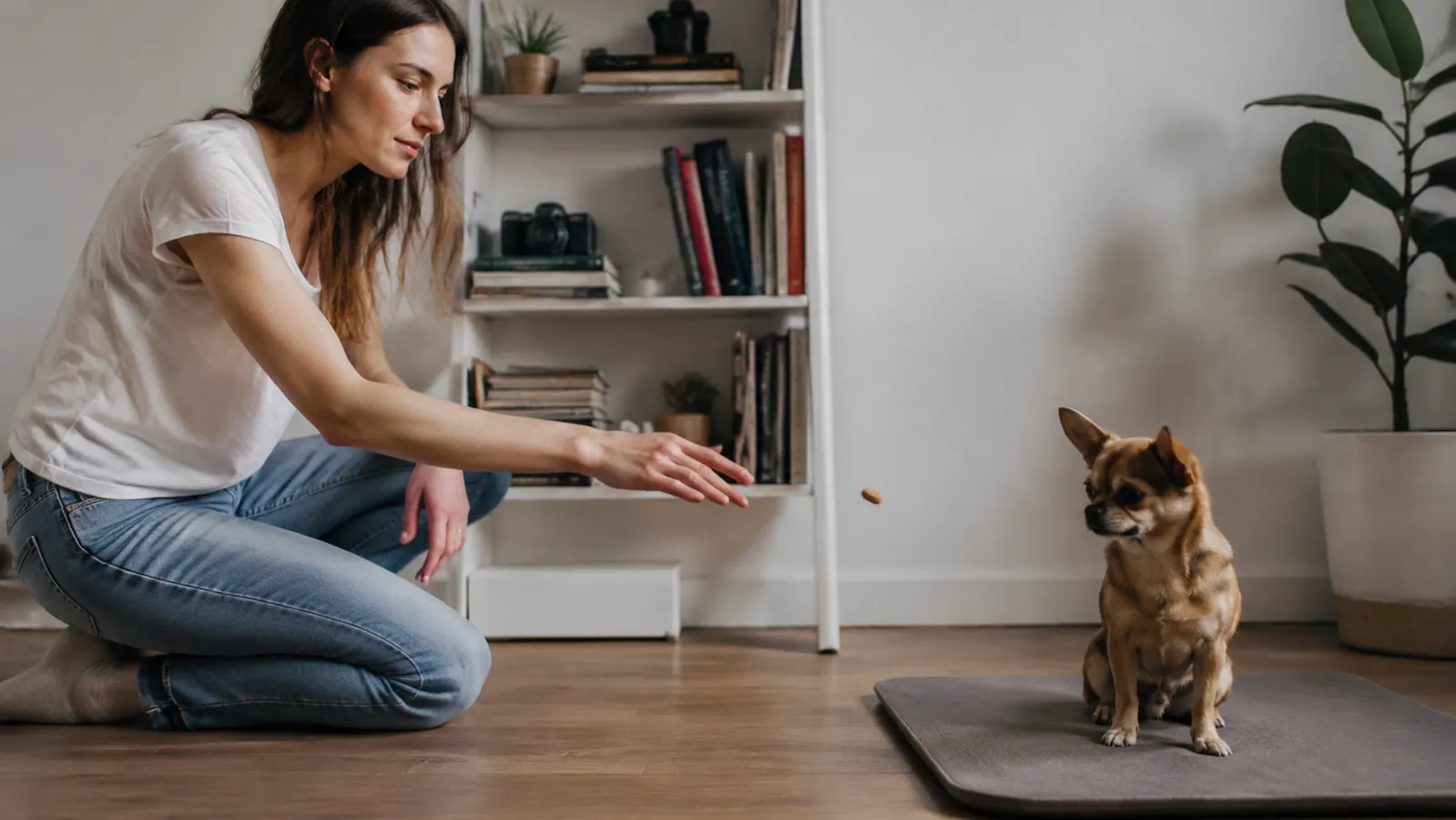
Once you have a functioning safe zone, a basic routine, and some fluency in reading your dog's signals, you can start doing deliberate counterconditioning work. This is the process of taking a specific trigger, like the sound of a broom on hardwood, or a stranger standing in the doorway, or the vacuum cleaner at a distance, and pairing it with something your dog reliably wants, usually a very high-value treat. You do this at a distance and intensity where the dog notices the trigger but does not go over threshold. Then you mark with a calm word and deliver the treat.
The key word in that description is threshold. Going over threshold means the dog is already reactive, already flooded with cortisol, and no learning is happening. You want to stay just below the line. For Penny, that meant starting vacuum work with the vacuum in the hallway, turned off, while she ate a piece of chicken in the living room. Three days later, the vacuum was on in the hallway. A week later, it was on in the same room. Counterconditioning is a slow ladder. Skipping rungs does not save time. It resets the clock.
If you are seeing no progress on specific triggers after four to six weeks of consistent work, that is a good moment to consult a certified applied animal behaviorist or a veterinary behaviorist, not a general obedience trainer. Anxiety that traces back to early developmental trauma sometimes needs professional assessment, and there is no shame in asking for that level of support.
Step 6: Consider a Calming Supplement as One Tool in the Kit
After about six weeks with Penny, when the baseline anxiety had come down noticeably from the trust-building work but she was still trembling through thunderstorms and certain high-stimulation situations, I started looking at calming supplements. I was clear-eyed about what they can and cannot do. A supplement is not going to rebuild a traumatized dog's relationship with the world. That work happens in the steps above. But a supplement that takes the edge off the physiological anxiety response can make the other work go a little faster, because a dog who is slightly less flooded is a dog who can learn a little more.
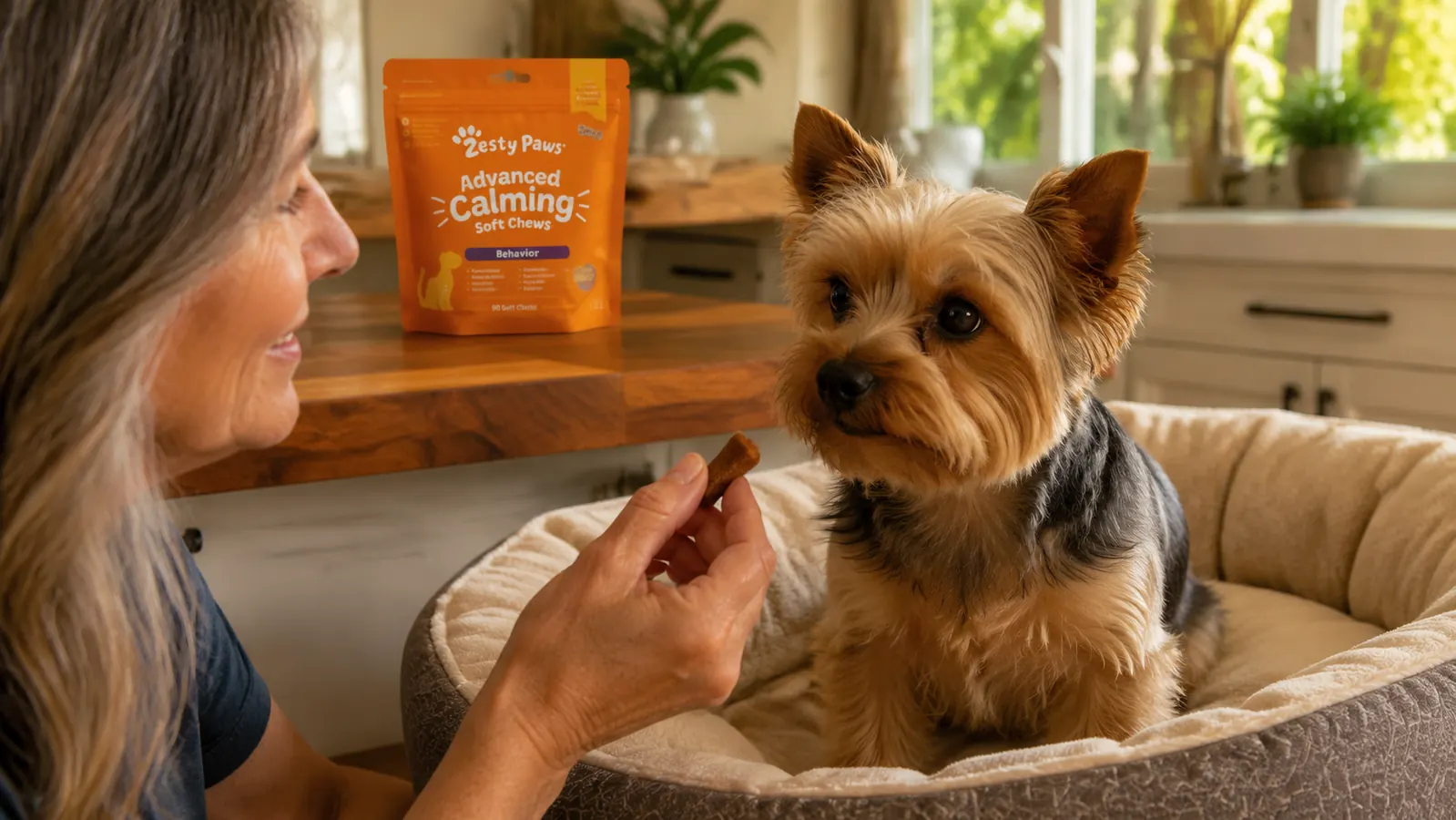
The product I settled on was Zesty Paws Advanced Calming Soft Chews, primarily because of the Suntheanine L-Theanine formulation. Suntheanine is a patented, clinically studied form of L-Theanine that supports alpha-wave brain activity, which is associated with a calm and alert state rather than sedation. That distinction mattered to me. I did not want Penny sedated. I wanted her physiologically less activated so she could function and learn. The chews are soft and small enough for a Yorkie-sized dog to eat without fuss, and Penny took to the flavor without any coaxing.
The results were not dramatic on day one. Over two to three weeks I noticed that her baseline trembling during the late-afternoon anxiety window, when the neighborhood kids came home from school, reduced meaningfully. She still noticed the noise. She just did not spiral the way she had before. At 4.2 stars across more than 5,500 reviews, the product has a realistic spread of outcomes. Some dogs respond more noticeably than others. What I would say is that for a dog already receiving the environment and routine support described above, the supplement added a real and measurable layer of calm.
Zesty Paws Calming Chews work best alongside a solid trust-building routine, not instead of one.
If your rescue dog is already in a stable environment with a consistent routine and you want to support the calming process at the physiological level, these soft chews are worth trying. Small enough for Yorkies and toy breeds, no sedation, Suntheanine L-Theanine formulation.
Amazon Check Today's Price on Amazon →What Else Helps
A few additional tools worth knowing about. Adaptil diffusers, which release a synthetic version of the calming pheromone mother dogs produce for their puppies, can provide a low-level background calming effect in the rooms where your anxious rescue dog spends the most time. They are not a substitute for any of the steps above, but they can layer in nicely once the fundamentals are in place. Thundershirts and similar pressure wraps work well for some dogs and do nothing for others. The only way to know is to try one during a moderate anxiety trigger, not during a full-scale thunderstorm. And do not underestimate the calming power of a long, slow sniff walk. Letting a dog set the pace and follow her nose, without redirecting or hurrying, is genuinely decompressing in a neurological sense. Five minutes of sniffing accomplishes more for a rescue dog's nervous system than a brisk twenty-minute structured walk.
If you want more context on recognizing anxiety in rescue dogs before it escalates, the guide on the 10 signs your rescue dog has anxiety walks through the specific signals most owners miss, particularly in dogs who were undersocialized early. And if you want a deeper look at the Zesty Paws supplement from a formulation and ingredient standpoint, the long-term review covers three months of results with a rescue dog in detail. Both are worth reading alongside this one.